Portable Power Station Camping: Pick the Right Size
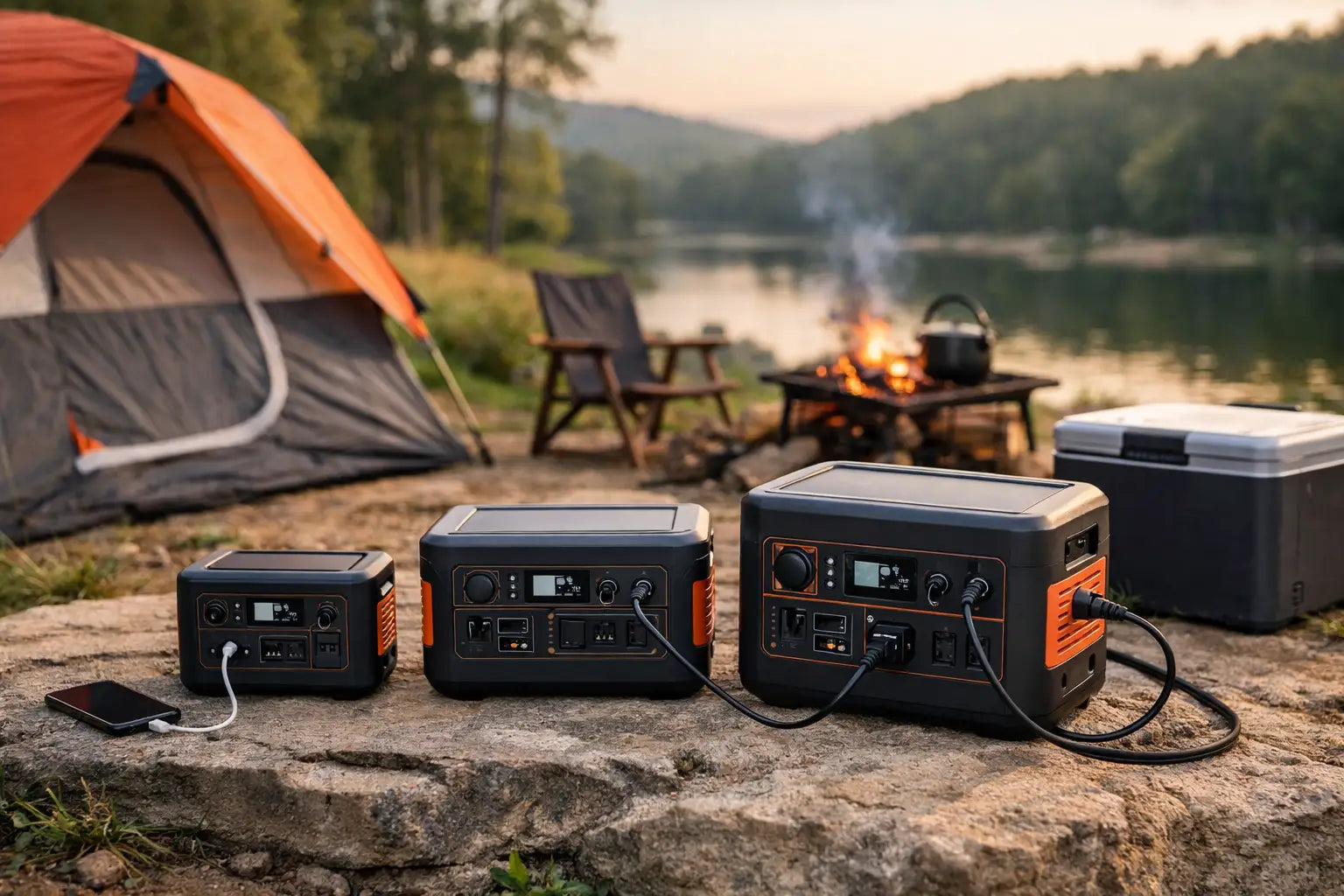
A dead phone is inconvenient at camp. A dead headlamp, cooler, CPAP machine, or weather radio can change the whole trip. Portable power station camping gives you a quiet, rechargeable source of electricity without relying on a noisy gas generator or running your vehicle battery down.
The right setup is not necessarily the biggest battery you can carry. It is the power station that matches your camp style, the devices you actually use, and the time between charging opportunities. A simple weekend tent trip needs far less capacity than a remote fishing weekend, a family campsite with several devices, or an overnight stay that depends on medical equipment.
Start With What You Need to Run
A portable power station stores electricity in watt-hours, usually written as Wh. That number tells you roughly how much energy is available. The inverter rating, shown in watts, tells you how much power the station can deliver at one time.
Both numbers matter. A 500Wh unit may have enough stored power to recharge phones and operate a small cooler, but it still may not run a 1,500-watt electric skillet. On the other hand, a high-output station with limited capacity can run a demanding device briefly but may not last through a full evening.
Before choosing a model, make a realistic device list. Include the items that support comfort and safety, not only the gear you hope to bring. For many campers, that means LED lanterns, phones, a GPS unit, a camera battery, a small fan, a portable speaker, and a powered cooler. Others may need a CPAP machine, laptop, drone batteries, or a heated sleeping pad.
Look for each device's wattage label or charging brick. Then multiply its wattage by the hours you expect to use it. A 10-watt light used for five hours consumes about 50Wh. A 45-watt cooler that runs intermittently may use far less than 45 watts every hour, but heat, sun exposure, and how often it is opened all affect the result.
Add your estimates, then leave a cushion of 20 to 30 percent for conversion losses and real-world use. Power stations do not deliver every rated watt-hour to a plugged-in device, especially when using AC outlets.
Portable Power Station Camping Sizes by Trip Type
For a one- or two-night tent camping trip, a power station in the 200Wh to 300Wh range can cover phones, lights, camera batteries, and occasional fan use. It is compact enough to move from the car to the tent area without turning setup into a hauling project.
A 500Wh to 700Wh station is often the practical middle ground for car campers and small families. It provides more room for a portable cooler, multiple phones, tablets, lanterns, and a few hours of laptop work. It can also offer a more comfortable reserve when weather delays your trip home.
For multi-day base camps, fishing trips, van travel, or CPAP use, consider 1,000Wh or more. These units are heavier and cost more, but the additional capacity can reduce the need to ration power every evening. Check whether the model has a telescoping handle or wheels if you will move it beyond a paved campsite.
There is a trade-off. Larger stations offer more reserve, but they take longer to recharge and use up more vehicle space. If your campgrounds have accessible outlets or you plan to use solar panels, a moderate-capacity station may be a more efficient choice than one oversized battery.
Do Not Confuse Watts With Watt-Hours
Watts measure immediate power demand. Watt-hours measure stored energy. A 1,000Wh power station can theoretically run a 100-watt device for about 10 hours, though actual runtime will be lower after inverter losses.
Pay special attention to appliances that create heat. Coffee makers, electric kettles, toaster ovens, hair dryers, space heaters, and hot plates can draw 800 to 1,800 watts or more. They drain batteries quickly and may exceed the station's output rating. For campsite cooking, a propane stove or fire-safe camp stove is usually the better tool, while the power station handles lighting, charging, cooling, and electronics.
Choose the Ports You Will Actually Use
A useful campsite power station should make charging simple without a pile of adapters. USB-A ports still work for many lights and older devices, while USB-C Power Delivery is a better fit for newer phones, tablets, and many laptops. A 100-watt USB-C port can be especially useful for campers who work remotely or edit photos on the road.
AC outlets are helpful for laptop chargers, CPAP equipment, battery chargers, and small appliances that cannot charge by USB. Check the number of outlets and the continuous AC output, not just the peak or surge rating. Surge power may help a compressor start, but it does not mean the station can continuously operate a high-draw appliance.
A 12-volt vehicle-style outlet is valuable for certain coolers, tire inflators, air pumps, and vehicle accessories. It is often more efficient than converting battery power to AC and back again. If a device supports 12-volt DC input, use that option when practical.
Plan How You Will Recharge at Camp
Start your trip with the station fully charged. For a short weekend, that may be all you need. For longer stays, choose a recharge method before you leave home.
Solar panels are a good match for campsites with open sun and unhurried daytime schedules. They are quiet, fuel-free, and useful when vehicle access is limited. Their output, however, changes with cloud cover, panel angle, tree shade, and the time of year. A panel rated for 200 watts rarely delivers its full rating all day long. Treat solar as a way to extend your power supply, not a guaranteed replacement for planning.
Car charging can work well while driving between trailheads, boat launches, or campsites. It is usually slower than wall charging, and it should not be used with the engine off for long periods. Protect the vehicle's starting battery first.
Campground electrical hookups are the fastest and most predictable option. If you have one, a smaller station can serve as a portable backup battery for tent use, picnic-table charging, or power outages at the site. Keep charging gear dry and positioned where cords will not become a trip hazard.
Set Up for Safe, Reliable Use
A power station is safer and quieter than a fuel-burning generator, but it still needs basic care. Keep it dry, out of standing water, and away from direct afternoon sun. Do not seal it inside a hot tent, a vehicle in full sun, or an unventilated storage bin while it is operating or charging. Battery performance drops in extreme cold and heat can damage the pack.
Place the station on a stable surface under a canopy, table, or other protected area where its vents remain clear. Use intact cords rated for the job, and avoid daisy-chaining power strips. If rain begins, disconnect nonessential gear and move the station to a dry location rather than trying to cover active equipment with a loose tarp.
For overnight power needs such as a CPAP, test the full setup at home. Confirm the machine's settings, determine whether a DC adapter is available, and run it for a night from the station. Heated humidifiers and heated tubing can increase energy use significantly, so plan capacity around your actual settings instead of a generic runtime estimate.
Never use a power station as a substitute for fire, water, or navigation planning. Keep headlamps available for every person, carry a paper map where appropriate, and pack a basic first-aid kit. Backup power works best as one part of a prepared campsite.
Pack Power Around Your Camping Style
For a quiet tent site, a compact station, folding solar panel, LED lighting, and a 12-volt cooler can create a comfortable setup without overloading the car. For kayak anglers or boaters camping near the water, prioritize weather protection, secure storage, and enough USB-C or 12-volt power for communication devices and battery chargers. For family campgrounds, extra ports and a larger battery reduce arguments over whose phone gets charged first.
Adventure Cove Store brings camping gear, lighting, outdoor comfort equipment, water-ready essentials, and practical electronics into one place so your camp setup can fit the way you actually travel.
Pack the battery with the same purpose you bring a shelter, stove, and sleeping system: to make the trip more dependable. Choose enough power for the gear that matters, protect it from the elements, and leave room for the best part of camp - time outside without hunting for an outlet.
Shop this guide


Compare all 6 lights & power →
Free shipping on all orders within the United States.