
Adjustable Dumbbell Workout for Beginners
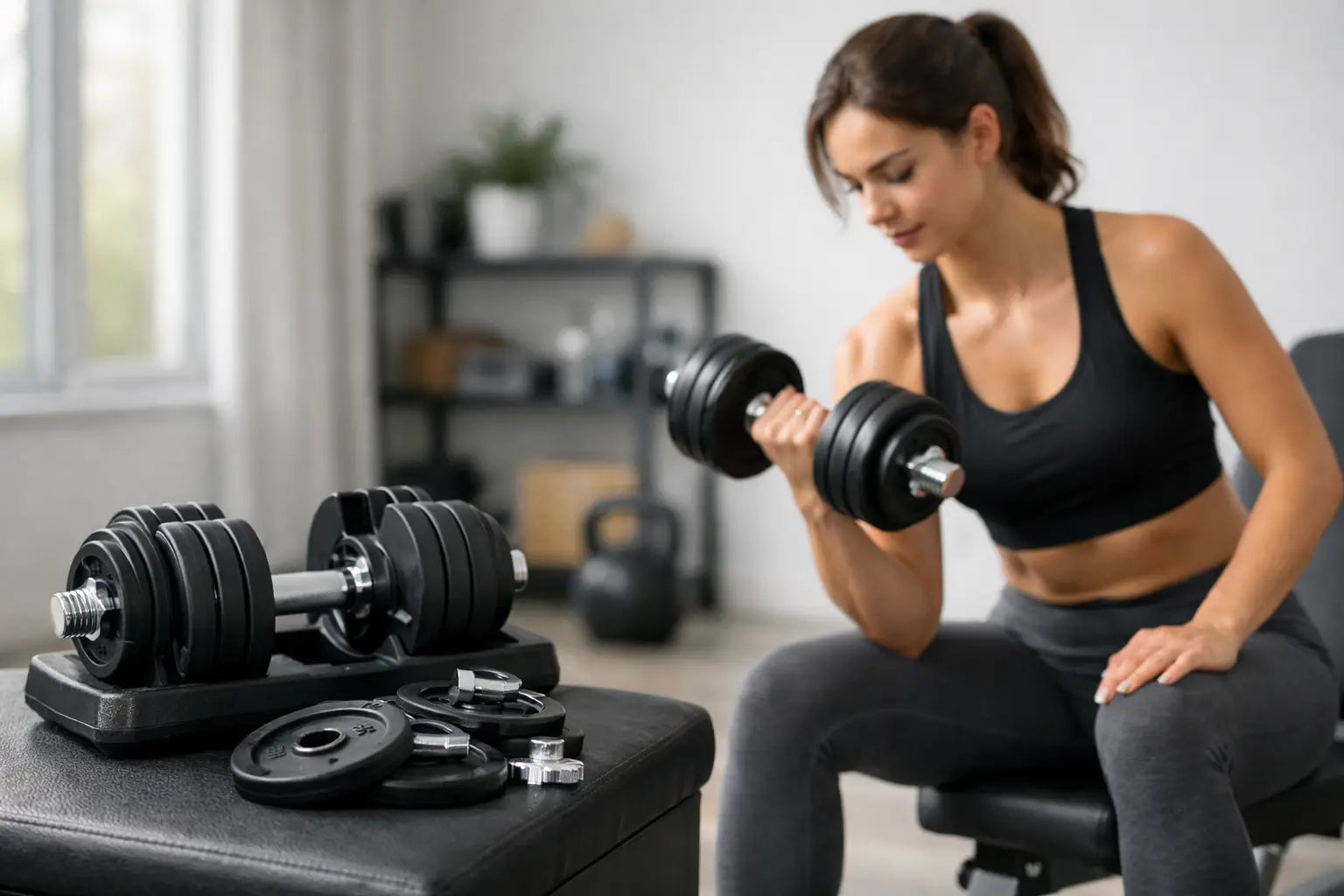
A pair of adjustable dumbbells can turn a spare corner of the house into a practical strength-training space. This adjustable dumbbell workout for beginners is built for people who want more capable legs, a stronger upper body, and better day-to-day movement without filling a room with equipment. The goal is not to lift the heaviest weight possible. It is to learn consistent, controlled reps and make small progress from week to week.
Adjustable dumbbells work especially well for a home setup because one compact set can cover pressing, pulling, squatting, hinging, carrying, and core training. You can keep the workout simple, store the equipment easily, and still have enough weight options to grow with the routine.
Set Up Your Adjustable Dumbbell Workout for Beginners
Before the first workout, make sure the plates or selector mechanism are fully secured. Check each dumbbell before every set, particularly if you change the load frequently. Train on a flat, clear surface with enough room to step back, lie down, and set the weights down safely. A stable chair or bench can be useful, but it should not slide, wobble, or have wheels.
Choose a starting weight that feels manageable but not effortless. For most exercises, the final two or three reps should require focus while still allowing clean form. If you have to twist, bounce, hold your breath, or shorten the movement to finish a set, the weight is too heavy right now. If you could perform eight or more additional reps at the end, add a small amount of weight next time.
Different exercises will need different loads. Squats and deadlifts usually allow more weight than shoulder presses, rows often allow more than curls, and one-arm movements may need a lighter starting point until balance improves. That is normal. Adjustable dumbbells let you match the load to the exercise instead of forcing every movement into one fixed weight.
Use the Effort Test
Start most sets with a weight that leaves about two to four good reps in reserve. In plain terms, stop while you could still complete a few more repetitions with solid technique. This gives beginners room to practice form, recover well, and build confidence.
For the first two weeks, use a conservative weight. Resist the urge to test your limits on day one. Soreness can happen when you begin strength training, but severe soreness that changes how you walk, sleep, or move is a sign to reduce volume or load.
Warm Up for Five Minutes
A warm-up does not need to be complicated. Walk briskly around the house, march in place, ride a stationary bike, or climb stairs for two to three minutes. Then perform a few bodyweight squats, hip hinges, arm circles, and easy wall push-ups.
Follow that with one lighter practice set of the first two exercises in your workout. The purpose is to raise your temperature and rehearse the movement, not to tire yourself out before the working sets begin.
The 3-Day Beginner Dumbbell Plan
Train on three nonconsecutive days each week, such as Monday, Wednesday, and Friday. If three days does not fit your schedule, train twice weekly and alternate Workout A and Workout B. Consistency beats an ambitious schedule that is hard to maintain.
Rest 60 to 90 seconds between most sets. Take up to two minutes after a demanding lower-body exercise if your breathing or form needs more recovery. Use a slower pace rather than rushing from movement to movement.
Workout A: Squat, Push, Pull
Perform two sets of each exercise during your first two weeks. Move to three sets when you can finish every set with stable form and recover comfortably. Aim for 8 to 12 repetitions unless noted otherwise.
Goblet squat: Hold one dumbbell vertically at your chest, with elbows angled down. Sit your hips back and down, keep your full foot planted, and stand by pushing through the floor. A box or chair behind you can provide a depth target, but do not crash onto it.
Dumbbell floor press: Lie on your back with knees bent and feet planted. Begin with the dumbbells over your chest, lower them until your upper arms lightly touch the floor, then press upward without slamming the weights together. The floor limits shoulder range, making this a useful beginner alternative to bench pressing.
One-arm dumbbell row: Place one hand on a stable chair or brace your free hand on your thigh. Pull the dumbbell toward your hip, not straight toward your shoulder. Keep your torso steady and avoid rotating open as you row. Complete all reps on one side before switching.
Romanian deadlift: Hold both dumbbells in front of your thighs. Soften your knees, push your hips back, and let the weights travel close to your legs until you feel tension in your hamstrings. Stand tall by driving your hips forward. This is a hip-hinge movement, not a squat, so your hips travel back more than your knees travel forward.
Suitcase carry: Hold one dumbbell at your side and walk slowly for 20 to 40 seconds. Keep your ribs stacked over your hips and resist leaning toward or away from the weight. Switch hands and repeat. Do two rounds per side.
Workout B: Lunge, Press, Hinge, Core
Use the same two-set starting point and 8 to 12 rep target. For unilateral exercises, complete the stated repetitions on each side.
Reverse lunge: Hold dumbbells at your sides or begin bodyweight-only if balance is the main challenge. Step one foot back, lower with control, then push through the front foot to return to standing. A reverse lunge is often easier on the knees than stepping forward, but shorten the range if you feel discomfort.
Standing shoulder press: Start with dumbbells near shoulder height and press overhead in a smooth path. Squeeze your glutes lightly and avoid leaning your ribs forward. If overhead pressing bothers your shoulders, use a lighter load, press one arm at a time, or return to the floor press while you build control.
Dumbbell glute bridge: Lie on your back with a dumbbell resting securely across the crease of your hips. Drive through your heels, raise your hips until your body forms a straight line from shoulders to knees, then lower slowly. Keep the movement controlled rather than arching your lower back.
Supported one-arm row: Repeat the row from Workout A. Beginners benefit from practicing this pull twice weekly because it helps balance pressing work and teaches good upper-back control.
Dead bug with a light dumbbell: Lie on your back, hold one light dumbbell straight above your chest with both hands, and slowly lower one heel toward the floor at a time. Keep your lower back gently connected to the floor. Perform 6 to 10 controlled reps per side.
Form Rules That Keep Training Productive
Good form is not about making every rep look identical. Your body proportions, mobility, and available equipment will influence your range of motion. The nonnegotiables are control, stable joints, and a position you can repeat without pain.
Keep the weights close to your body during rows and deadlifts. Move slowly enough on the lowering phase that you stay in control. Exhale as you press, stand, or pull, and inhale as you lower. Avoid holding your breath for long stretches, especially when you are learning.
Muscle effort and mild training fatigue are expected. Sharp pain, pinching, numbness, dizziness, or pain that worsens from set to set are reasons to stop. If you have a current injury, recent surgery, uncontrolled blood pressure, or a medical condition that affects exercise tolerance, get personalized guidance before beginning a new program.
How to Progress Without Buying More Equipment
Use a simple progression rule: when you can complete the top end of the rep range for every set with clean form, increase the weight at your next session. With adjustable dumbbells, even a small increase can feel significant on shoulder presses, curls, and lunges.
If the next plate jump is too large, keep the same weight and add one or two reps, slow the lowering phase to three seconds, or add a third set. Do not change everything at once. One small adjustment gives you a clear way to tell whether you are getting stronger.
Write down the date, exercise, weight, reps, and any form notes in your phone or a notebook. This turns a home workout from a guess into a repeatable plan. It also helps you recognize progress that is easy to miss, such as completing the same squats with better depth or carrying a dumbbell with a steadier posture.
A dependable home fitness setup should make active living easier, not more complicated. Keep your dumbbells where you can reach them, protect a regular 30 to 45 minute training window, and let each controlled session build the strength you will use at home, on the trail, and wherever the next adventure takes you.
Shop this guide


Compare all 17 adventure cove picks →
Free shipping on all orders within the United States.