
Beginner Rock Climbing Gear Guide for First Climbs
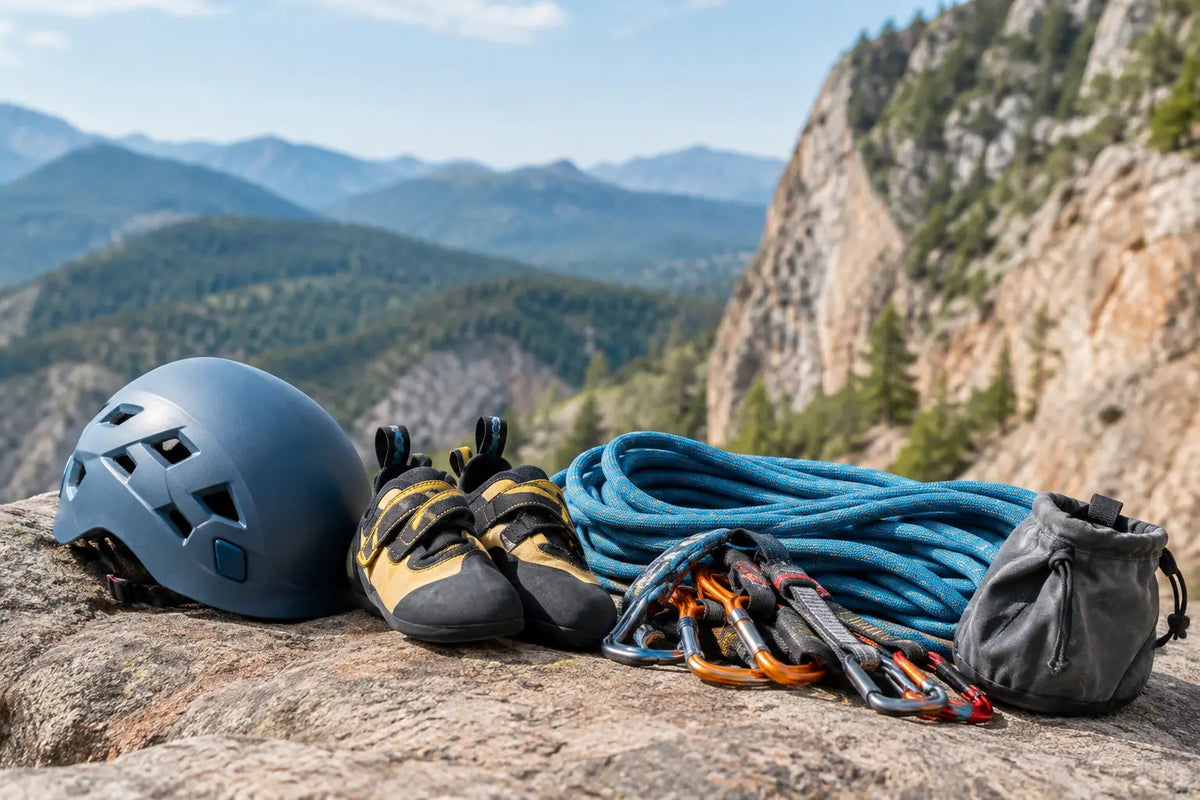
Your first climbing session should be spent learning movement, not fighting uncomfortable shoes or guessing whether a piece of equipment is safe to use. This beginner rock climbing gear guide separates the equipment you need now from the gear that can wait, whether your first holds are inside a climbing gym or outside at a local crag.
Climbing has a low barrier to trying it and a higher standard for doing it responsibly. Start with properly fitted equipment, instruction from qualified gym staff or guides, and a simple plan for the type of climbing you actually expect to do. A bouldering-only setup looks different from a rope-climbing setup, and outdoor climbing requires more knowledge than carrying more gear.
Start With Your Climbing Style
Most new climbers begin with bouldering, top-rope climbing, or a mix of both. Bouldering happens on shorter walls above thick mats and does not use a rope. Top-rope climbing uses a rope that runs through an anchor above the route, with one climber tied in and another person belaying from the ground.
For a first gym visit, rental equipment is usually the practical choice. It lets you test shoe fit, try a harness, and decide which style you enjoy before committing to a full setup. Once you are climbing regularly, owning the items that touch your body most often - especially shoes and a harness - makes sessions more comfortable and consistent.
Outdoor climbing is not simply indoor climbing with a better view. Weather, rock conditions, anchors, route access, communication, rescue considerations, and local rules all matter. Learn from a certified instructor, experienced mentor, or established guide service before taking responsibility for an outdoor rope system.
Beginner Rock Climbing Gear Guide: What to Buy First
A reliable starter kit centers on climbing shoes, a harness for rope climbing, a locking carabiner, and a chalk bag. Add a belay device only after you have been taught to use it correctly. For bouldering, shoes and chalk are the first purchases that make sense.
Climbing shoes
Climbing shoes are your most personal piece of gear. They should fit snugly without causing sharp pain, numbness, or curled toes that you cannot tolerate. New climbers often assume the tightest shoe is the best shoe. That is rarely productive. A moderately comfortable, neutral shoe helps you practice foot placement longer and improves the odds that you will keep climbing.
Look for a flatter sole and moderate rubber coverage as a first pair. Aggressive downturned shoes can be useful on steep, advanced routes, but they are less comfortable for general gym training and beginner mileage. Try shoes on later in the day, when feet are slightly fuller, and follow the brand's fit guidance because sizing varies widely.
Harness
If you plan to top-rope or learn lead climbing, choose a climbing-specific harness from a reputable manufacturer. It should sit above your hip bones, with the waistbelt snug enough that it cannot slide down over your hips. Leg loops should be secure but should not restrict squatting or high steps.
A basic adjustable harness is often a smart first purchase because it accommodates seasonal clothing and small changes in fit. Check that the harness is intended for the kind of climbing you plan to do and that its tie-in points, buckles, stitching, and gear loops are in good condition. Do not buy used soft goods unless you know their complete history and can verify they have not been damaged, modified, or exposed to chemicals.
Chalk bag and chalk
Sweaty hands make holds feel smaller than they are. A chalk bag and climbing chalk improve grip by managing moisture, not by making holds sticky. For indoor bouldering, a chalk bucket that stays open on the floor can be convenient. For rope climbing, a waist-worn chalk bag is easier to reach while on the wall.
Many gyms prefer loose chalk to stay contained or require chalk balls to reduce dust. Check the facility rules before purchasing a large refill bag. A simple bag with a reliable drawstring closure is enough for most beginners.
Locking carabiner and belay device
A locking carabiner and belay device are core rope-climbing tools, but they are not beginner props to clip onto a harness without training. The carabiner must be rated for climbing, and the device must be compatible with the rope diameter you are using. Your gym may require a specific belay test before allowing you to belay independently.
Assisted-braking belay devices are popular because they add a braking function, but they do not replace correct hand position, attention, or training. Every belay device has a specific loading orientation and manufacturer instructions. Practice under direct supervision until the process is automatic.
Gear to Rent Before You Own It
Renting helps you avoid buying equipment for a discipline you may not pursue. A gym can usually provide shoes, harnesses, belay devices, and ropes for top-rope climbing. If you only climb once or twice each month, rentals may remain the better value.
For outdoor days with a qualified guide, the guide service often supplies ropes, helmets, quickdraws, anchors, and other technical equipment. That is useful because these items require inspection, record keeping, correct use, and eventual retirement. Buying a rope before you understand rope systems is usually money spent too early.
A climbing helmet is another item worth trying before selecting one. If you will climb outdoors, a helmet is strongly recommended to protect against falling rock, dropped equipment, and impacts during a fall. It should sit level on your head, adjust securely, and not shift when you look up. Helmets are not normally needed for indoor gym climbing unless the facility requires them.
Outdoor Gear That Comes Later
As your skills develop, outdoor climbing may add a rope, personal anchor system, quickdraws, slings, cordelette, climbing pack, approach shoes, helmet, and weather-ready layers. Traditional climbing introduces additional protection hardware and much more decision-making. None of this should be assembled from a checklist alone.
For a first guided outdoor outing, focus on personal essentials: fitted shoes, a harness if requested, helmet, water, food, sun protection, a light insulating layer, and a small first-aid kit. Carry more water than you think you need on warm days. Rock areas can have long approaches, limited shade, and little access to supplies once you leave the parking area.
Keep clothing practical. Flexible pants or shorts, a breathable shirt, and a layer that fits under your harness work well. Avoid loose jewelry, dangling drawstrings, or anything that can catch in hardware. In cooler weather, pack a warm layer for belaying, since standing still at the base of a route can feel much colder than climbing.
Safety Checks Matter More Than Extra Gear
Good equipment cannot compensate for skipped checks. Before every rope climb, inspect the harness fit, tie-in knot, belay device orientation, locking carabiner, rope path, and communication plan. Your partner should check you, and you should check your partner. This small routine catches preventable mistakes.
Know when to retire gear. Soft goods such as ropes, harnesses, slings, and helmets have manufacturer guidance, but visible damage always takes priority. Retire equipment with deep cuts, melted fibers, major abrasion, damaged stitching, chemical contamination, or an unknown history. A helmet should be retired after a significant impact, even if damage is not obvious.
Avoid making climbing gear do jobs it was not designed for. Do not use hardware-store carabiners for life-safety connections, store ropes in direct sun or a damp garage, or leave equipment loose in a vehicle where heat and chemicals can affect it. Keep your gear clean, dry, organized, and away from battery acid, fuel, solvents, and pet chewing.
Build a Setup You Will Actually Use
The best first climbing purchase is often the item that removes friction from your routine. Comfortable shoes make you want another session. A properly fitted harness makes rope instruction easier. A chalk bag keeps a small but useful essential close at hand.
Start simple, rent the technical equipment you do not yet understand, and spend your early climbing budget on coaching and consistent practice. When your gear fits well and your safety habits are solid, you can put more attention where it belongs: choosing the next hold and enjoying the climb.