
Best Adjustable Dumbbells for Home Training
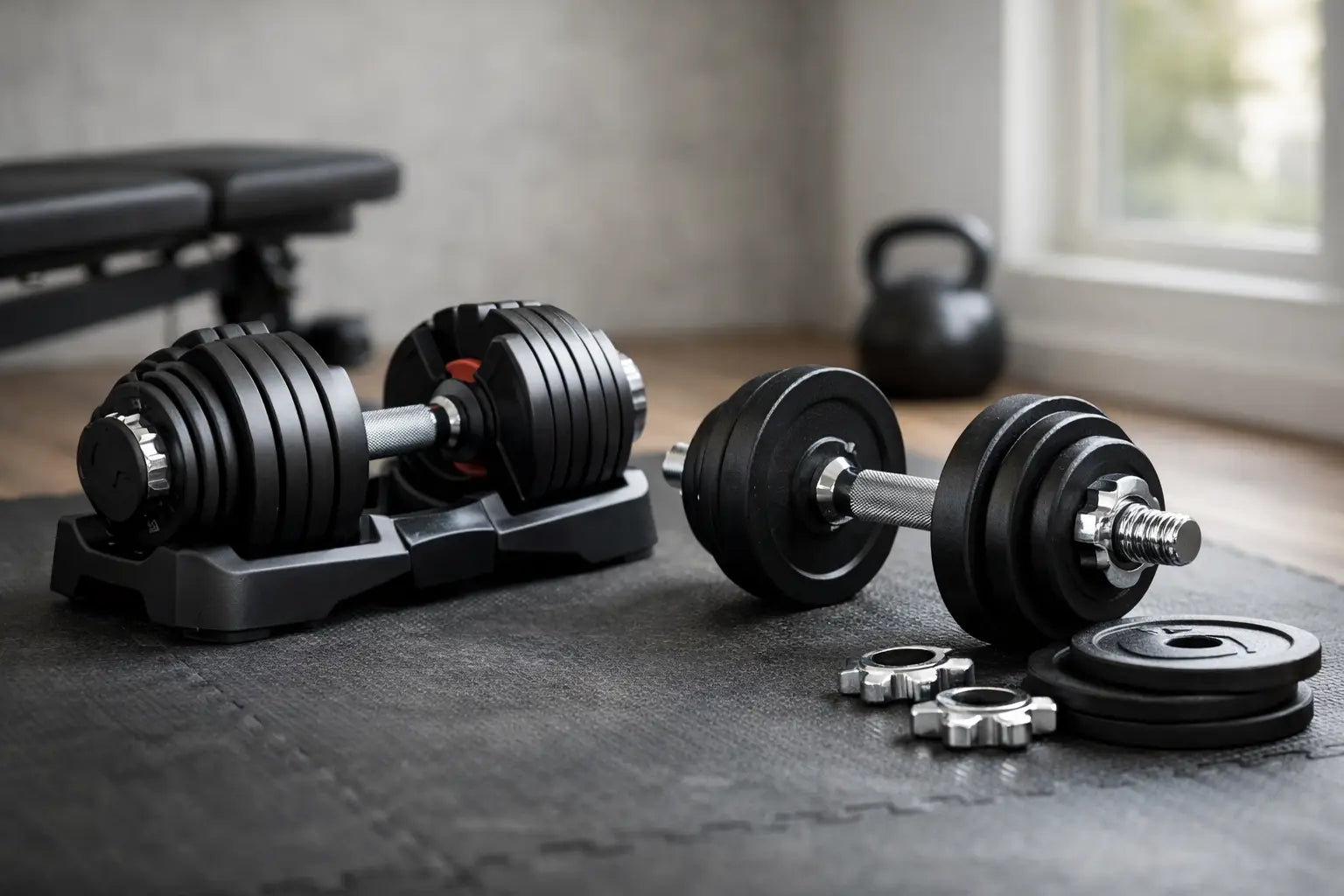
A pair of dumbbells can take up an entire rack, or it can sit neatly beside a workout mat. That difference is why the best adjustable dumbbells are one of the most useful upgrades for a home fitness setup. They give you multiple working weights without turning a spare room, garage, or patio into a crowded weight room.
The right pair is not automatically the heaviest or the cheapest. It needs to match the way you train, the exercises you repeat every week, and the space you have available. A lifter building strength with presses, rows, squats, and deadlifts needs something different from a beginner focused on mobility, light resistance work, and consistent full-body sessions.
What Makes the Best Adjustable Dumbbells?
An adjustable dumbbell replaces several fixed-weight dumbbells with one handle and a set of selectable plates or weight increments. Instead of storing pairs at 5, 10, 15, 20, and 25 pounds, you change the load on the same pair. For apartment gyms, multipurpose living areas, and compact garages, that is a practical advantage.
The best option comes down to four connected factors: usable weight range, adjustment speed, handle feel, and durability. Price matters, but a lower-priced set is not a bargain if its increments do not support your workouts or if changing weight interrupts every set.
A good set should also feel balanced when lifted. Adjustable designs carry more hardware than a standard dumbbell, so the weight distribution, handle shape, and overall length matter. A longer dumbbell can feel fine for rows and goblet squats but may get awkward during curls, overhead presses, or close-grip movements.
Start With Your Real Working Weights
Before choosing a maximum weight, think about the weights you use now and the weights you will likely need six to twelve months from now. Many home exercisers overestimate the value of an extreme maximum and underestimate the value of small jumps.
For beginners and general fitness, a range that starts low and progresses in manageable steps is usually more valuable than a pair built only for heavy lifting. Smaller increases help with lateral raises, triceps work, shoulder presses, rehabilitation-style movement, and gradual progression.
For experienced strength training, higher capacity becomes more important. Rows, chest presses, Romanian deadlifts, split squats, and floor presses can quickly outgrow light sets. If your program regularly calls for heavy lower-body or pulling work, look for a design that reaches a challenging load per hand rather than relying on a single heavy fixed dumbbell later.
The key question is simple: will this pair make your main exercises harder over time? If the answer is yes, it supports progress. If not, it may only serve as a temporary starter set.
Adjustable Dumbbell Types Compared
There is no single best mechanism for every home gym. Each style makes a different trade-off between speed, feel, compact storage, and long-term flexibility.
Selectorized Dial Dumbbells
Selectorized dumbbells use a dial, pin, or lever to choose the weight while the dumbbell sits in its storage tray. Lift the handle, and only the selected plates come with it. This system is fast, tidy, and especially useful for interval workouts where you move quickly from presses to rows to lunges.
Their biggest strength is convenience. A quick change lets two people share the same set during a workout or lets one person run a circuit without stopping to manually load plates. Most include a molded tray that keeps equipment organized between sessions.
The trade-off is that these mechanisms have moving parts. They should be placed back in the tray carefully and should not be dropped. If you want dumbbells for explosive movements, outdoor workouts on uneven ground, or high-impact training, a selectorized set may require more care than you want to give it.
Plate-Loaded Adjustable Dumbbells
Plate-loaded models use threaded collars, spin locks, or quick-lock ends to secure individual plates to a handle. They take longer to change, but they are often durable, straightforward, and flexible. Many lifters like the familiar feel and the ability to add compatible plates when their strength improves.
This style works well for people who train in straight sets. If you complete several sets of bench presses at one weight before moving to the next exercise, spending a little time adjusting the load is not a major problem. It is also a solid option for a garage gym where simple construction and long service life matter most.
Pay attention to collar security and plate shape. Loose collars can make a workout distracting, while wide plates can limit range of motion. A plate-loaded dumbbell is usually longer at heavier loads, so check whether that design will feel comfortable for your preferred movements.
Compact Block-Style Dumbbells
Compact block-style designs keep the plates in a squared or contained shape rather than using round plates. They can be space-efficient and stable in storage, with some models using a selector pin or sliding adjustment system.
They are a practical middle ground for many home gyms, particularly if you want faster changes than traditional spin locks but a more contained design than exposed plates. The shape can feel different during presses and curls, though. Some users prefer it, while others want the familiar contour of round fixed dumbbells.
Choose Increments That Support Progress
Weight range gets attention, but increments deserve equal consideration. A set that jumps in large steps may be workable for rows and lower-body exercises yet frustrating for smaller muscle groups. Moving from 10 to 20 pounds per hand is a major change for lateral raises, curls, and overhead presses.
Smaller increments give you more ways to progress. You can add a little weight, complete more repetitions, slow the lowering phase, or add another set. That flexibility is useful when you are training at home without a full rack of equipment.
A practical home setup often benefits from low starting weights and regular increases through the middle of the range. Heavy capacity remains valuable, but usable steps across the range are what make a dumbbell set work for warm-ups, accessory movements, and full-body strength training.
Check Handle Comfort and Workout Fit
A dumbbell can have an impressive specification sheet and still be wrong for your hands. Look at handle diameter, grip texture, and handle length. A grip that is too thick can fatigue smaller hands during high-repetition work. A very aggressive texture may feel secure for heavy rows but uncomfortable for longer sessions without gloves.
If possible, compare the handle length with your hand width. You need enough room for a natural grip without your fingers crowding the selector or plate edges. This matters even more if multiple people in the household will use the set.
Also consider the exercises you actually perform. For compact living spaces, adjustable dumbbells are ideal for floor presses, rows, lunges, squats, curls, carries, and core work. If your routine includes fast dumbbell snatches, burpees over weights, or movements where weights may hit the floor, prioritize a tougher design and use protective flooring.
Storage, Flooring, and Safe Setup
Adjustable dumbbells save space, but they still need a dedicated home. Keep the tray or plates on a level surface where you can re-rack them without twisting or reaching. A low, stable rack or a clear floor area near your workout mat is usually enough.
Rubber flooring or a dense exercise mat helps protect hard surfaces and reduces noise. It also gives you a clear training zone, which matters when workouts happen between daily household routines. Do not assume every adjustable dumbbell is safe to drop just because it is made of metal. Follow the product guidance, especially for models with selectors, plastic housings, or fitted storage cradles.
For homes with children or pets, return weights to their tray after every session. Loose plates and heavy handles are not equipment to leave under a coffee table or beside a walkway.
How to Buy for Your Training Style
For quick circuits, calorie-burning sessions, and shared household workouts, selectorized dumbbells are usually the most convenient choice. Fast changes keep the pace moving and reduce clutter.
For steady strength work and long-term adaptability, plate-loaded dumbbells offer a simple, durable route. They take more time between exercises, but they can be a dependable fit for a garage gym or a dedicated training area.
For an all-purpose home gym, choose the design you will use consistently. A compact pair with sensible increments and a comfortable handle often delivers better results than a massive set that feels cumbersome or never leaves its tray.
Build your setup around the workouts that help you feel stronger for the rest of life - carrying camp gear, loading a kayak, handling home projects, or staying active between weekends outside. The right dumbbells should make it easier to train this week, then give you room to do a little more next week.
Shop this guide


Compare all 5 cardio equipment →
Free shipping on all orders within the United States.