
Best Inflatable Kayak for Fishing Buyers
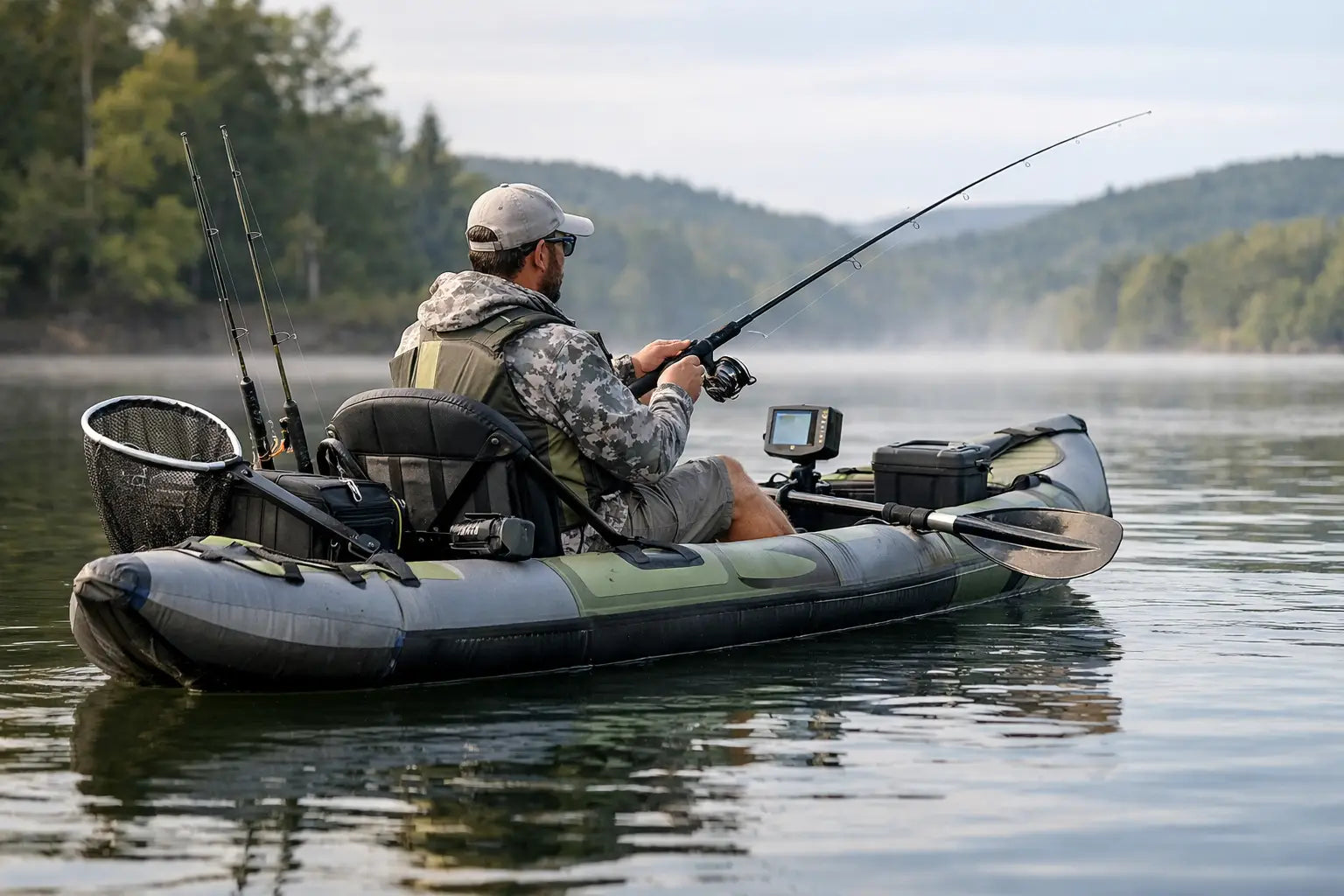
A fishing kayak has to do more than float. It needs to keep you stable while you reach for a tackle box, give your rods a protected place to ride, and carry enough gear for a full morning on the water. The best inflatable kayak for fishing is the one that matches where you fish, how much equipment you bring, and whether you need to carry it from a vehicle to the launch by yourself.
Inflatable models make a lot of sense for anglers with limited garage space, apartment storage, smaller vehicles, or a mix of fishing plans. Packed down, many fit in a carry bag or trunk. Set up correctly, a well-built inflatable can provide a stable, capable platform for ponds, protected lakes, slow rivers, and calm coastal backwaters. The trade-off is that you need to pay closer attention to construction, inflation pressure, weight limits, and setup time than you would with a rigid kayak.
What Makes the Best Inflatable Kayak for Fishing?
Start with the water, not the marketing photos. A wide, flat-bottomed inflatable with a rigid drop-stitch floor is usually a practical choice for quiet lakes and protected water where stability matters most. The wider stance helps when casting, landing fish, or shifting position to access a cooler behind your seat.
If you fish moving rivers or regularly cover longer distances, look for a hull with a defined bow and stern, a removable fin or skeg, and enough length to track predictably. Short, very wide kayaks turn easily but can wander with every paddle stroke. Longer models tend to move straighter and carry a little more speed, though they need more room to maneuver around tight cover.
Material quality matters because fishing gear is hard on a boat. Multiple air chambers add a margin of safety if one chamber loses pressure. Reinforced PVC, welded seams, protective rub strips, and a tough floor help the kayak stand up to launch ramps, gravel banks, hooks, and regular loading. No inflatable is immune to a sharp hook or knife, but durable construction and careful handling reduce the risk considerably.
Stability is more useful than top speed
For most anglers, primary stability should be the first priority. That is the steady, planted feeling you get when sitting still. A kayak that feels secure makes it easier to cast accurately, handle a fish, and turn around for gear without worrying about every movement.
Secondary stability matters when the kayak leans during a turn or in a small wake. A well-designed hull should feel predictable rather than suddenly tipping. If standing to fish is part of your plan, choose a model specifically rated and shaped for standing. Even then, conditions matter. Standing comfortably on a glassy pond is very different from standing in wind, current, or boat traffic.
Choose Capacity for Your Fully Loaded Day
Do not shop by body weight alone. The listed weight capacity has to cover you, the kayak seat, paddle, PFD, rods, tackle, cooler, anchor, fish finder battery, and any catch you bring home. A 250-pound angler can quickly exceed the useful capacity of a 350-pound kayak after adding fishing equipment.
A good practical target is to keep your expected load well below the maximum rating. That helps preserve freeboard, which is the sidewall height remaining above the water. More freeboard gives you a drier ride and a larger safety cushion when conditions become choppy.
Think honestly about how you fish. A minimalist pond angler may only need one rod, a small tackle bag, and a drink. A day-long bass trip can involve several rod setups, a landing net, a cooler, rain gear, electronics, and an anchor. Buying enough capacity from the start is more useful than trying to strap equipment to every open surface later.
Solo, tandem, and convertible layouts
A solo inflatable is easier to carry, quicker to set up, and simpler to control alone. It is often the right fit for anglers who fish before work, make short evening trips, or need to launch from small access points.
Tandem kayaks offer more total capacity and can bring a partner, child, or dog along. They can also work for a solo angler who wants a large open deck for gear. The compromise is weight and handling. A long tandem can be awkward to load, carry, and paddle alone, especially when wind catches the sidewalls.
Convertible models are useful when your plans change through the season. Check whether the seat positions actually leave a workable fishing area in solo mode. An open interior is only valuable if you can still reach your tackle, paddle freely, and keep loose gear secure.
Fishing Features That Earn Their Space
A high seat is one of the most valuable features on an inflatable fishing kayak. Raised seating improves visibility, makes casting more comfortable, and is much easier on knees when getting in and out. Look for an adjustable, supportive seat with a secure attachment system. A flimsy seat that sags after an hour can turn a good hull into a frustrating fishing platform.
Rod holders are convenient, but placement is more important than quantity. Flush-mounted holders behind the seat are useful for transport or trolling. Adjustable holders within reach can be better for bait fishing or running a second line where legal. Make sure rods will not interfere with your paddle stroke or create a snag point when you need to move quickly.
Storage should be easy to reach while seated. A rear cargo area can hold a cooler or crate, while bungee rigging keeps dry bags and jackets in place. Small accessory pockets are helpful for pliers, leader material, sunscreen, and a phone case. Waterproof storage is still necessary even with a self-bailing or raised-floor design. Water finds its way into any fishing setup.
Mounting options deserve a closer look if you plan to use electronics. A fish finder, transducer, battery, navigation light, or action camera needs a stable, compatible mounting surface. Avoid drilling or gluing accessories onto an inflatable unless the manufacturer specifically supports that installation. A removable mounting board or purpose-built accessory rail is generally a safer approach.
Setup Time, Transport, and Maintenance
An inflatable kayak is portable, but it is not instant. Most fishing-ready models need to be unfolded, inflated to the correct pressure, fitted with seats and fins, and loaded with gear. A quality pump with a pressure gauge saves time and prevents underinflation. Too little pressure can make the floor flex, reduce tracking, and leave the boat feeling less stable.
Plan for setup at home the first time, not in a crowded launch parking lot before sunrise. Practice fitting the seats, locating valves, attaching the fin, and packing the boat back into its bag. That first dry run also shows whether the loaded bag is realistically manageable for one person.
After each trip, rinse off mud, sand, vegetation, and especially saltwater. Let the kayak dry completely before packing it away. Storing a damp boat can lead to mildew, odors, and premature wear. Check valves, seams, D-rings, and the floor for damage before the next launch, and carry the included repair kit on the water.
Safety Gear is Part of the Kayak Package
A personal flotation device is not optional fishing gear. Wear a properly fitted US Coast Guard-approved PFD, especially when launching alone, fishing cold water, or moving through current. Keep a whistle, waterproof light, phone protection, and a basic first-aid kit accessible rather than buried under cargo.
Wind is one of the biggest challenges for lightweight inflatables. Check the forecast, know your route, and leave extra energy for the paddle back. On larger lakes, stay close to shore when possible and avoid crossing open water during rising wind or heavy boat traffic. An anchor can help hold position, but use an anchor system carefully and never anchor from a point that could pull the kayak sideways in strong current.
The right fishing inflatable gives you a practical way to get on the water without needing a roof rack, trailer, or dedicated storage room. Choose the hull and capacity for your real fishing day, build your setup around safety and reachable gear, and give yourself time to learn the boat before chasing that early bite. Adventure Cove Store can help you prepare with kayak, fishing, and outdoor essentials that keep the next launch simple and well organized.
Shop this guide


Compare all 20 kayak & boat accessories →
Free shipping on all orders within the United States.