
Camping Cookware Materials Compared: Titanium, Stainless Steel, and Aluminium
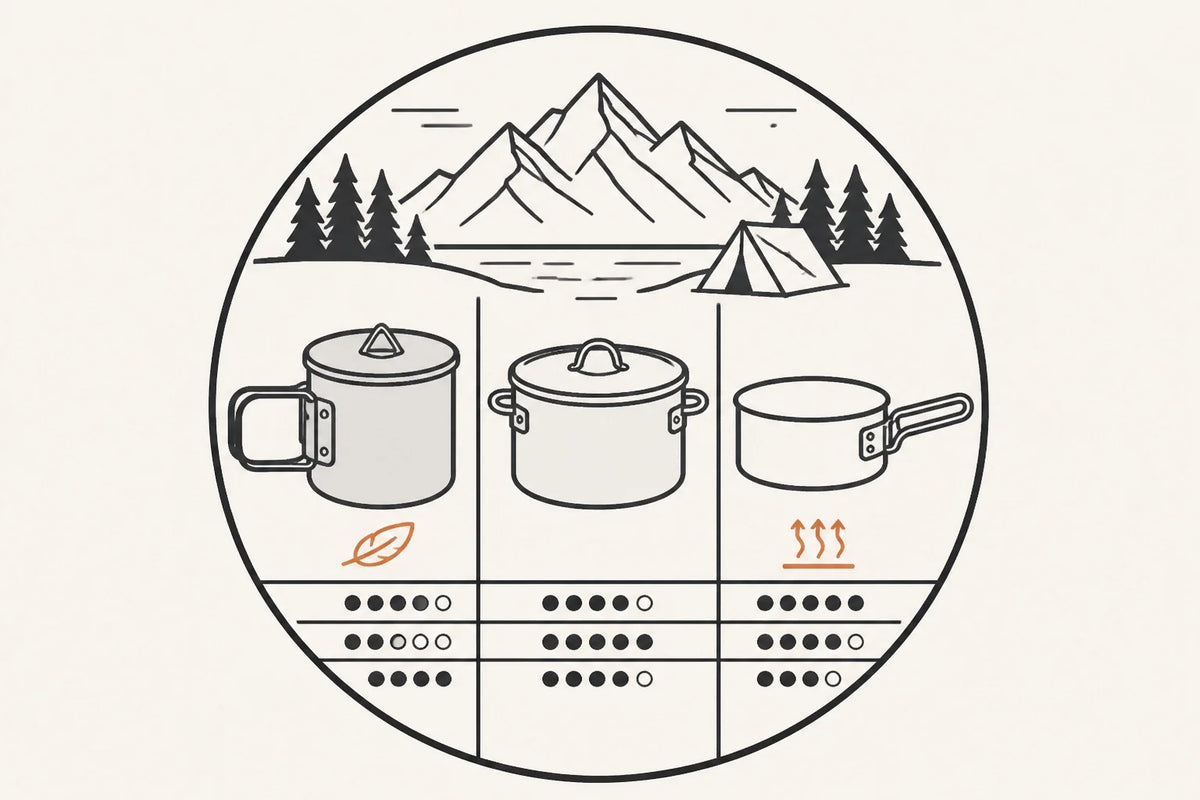
There's a good chance you've stood in a camping store (or stared at an online store for way too long) trying to figure out why some camping cookware costs three times more than what's sitting right next to it. The pots look almost identical. So what's the deal?
The answer usually comes down to one thing: material. Titanium, stainless steel, and aluminium each behave very differently once you're actually out in the field, and choosing the wrong one for your style of camping is one of the most common mistakes beginners make. You end up with something too heavy, too expensive, or that burns every meal you attempt to cook.
The good news is that this doesn't have to be complicated. In this post, we'll break down exactly how these three materials compare on weight, durability, heat distribution, and cost. We'll look at which works best for backpackers, which suits car camping trips, and where aluminium quietly holds its own. By the end, you'll have a clear, simple way to pick the right camping cookware for how you actually camp, not just how camping looks on social media.
Why Cookware Material Matters More Than You Think
Pick the wrong camping cookware material and you will know it on the first morning out. Maybe your titanium pot scorches oatmeal before the center is warm. Maybe your stainless steel set adds two pounds to a pack you are already struggling with at mile eight. That frustration is avoidable, and it almost always comes down to one mismatch: the material does not fit how you actually camp.
Four variables separate the three main materials, titanium, stainless steel, and aluminum: weight, heat distribution, durability, and cost. No single material wins all four. Titanium is the lightest but the most expensive and cooks unevenly. Stainless steel is the toughest but the heaviest. Aluminum sits in the middle on weight and cost, and distributes heat well among the three.
Heat distribution comes down to a property called thermal conductivity, which measures how efficiently a material spreads heat across its surface. A material with low conductivity creates hot spots directly over the flame while the edges stay cooler. That matters a lot when you are cooking scrambled eggs on a camp stove. It matters less when you are just boiling water for a freeze-dried meal.
Your camping style should drive your material choice more than brand appeal or price alone. A well-matched outdoor cookware set performs noticeably better than an expensive one chosen for the wrong use case.
The sections below break down each material in detail. A comparison table and decision framework at the end let you match your camping style to the right choice quickly.
Titanium Camping Cookware: Ultralight but Unforgiving
Titanium is the material that ultralight backpackers talk about first, and for good reason: it's genuinely remarkable at one thing.
Weight is where titanium earns its reputation. A titanium camping cookware pot is noticeably lighter than stainless steel or aluminium equivalents. Solo titanium pots are among the lightest camp cooking vessels available. On a thru-hike where you're weighing every item in your pack, that difference is meaningful over 20-plus miles a day.
The trade-off is heat distribution, and it's a real one. Titanium's thermal conductivity is significantly lower than aluminium's, meaning heat pools directly under the flame instead of spreading across the base. The result is hotspots, scorched food, and frustration if you're trying to cook anything beyond boiling water.
You can work around it with a few habits:
Keep your flame low and steady
Stir constantly when heating anything thicker than water
Stick to simple meals: instant noodles, rehydrated backpacking meals, oatmeal, coffee
Titanium rewards the boil-and-eat approach. It punishes anyone expecting to saute vegetables or simmer a sauce.
Cost reflects the material's complexity. Titanium is harder to machine and source than steel or aluminium, so a quality titanium camping cookware set is meaningfully more expensive than aluminium or stainless steel equivalents. Pairing it with a lightweight titanium stove builds out a genuinely ultralight camp kitchen setup.
On safety, titanium is one of the cleaner options available. Titanium is widely regarded as one of the more inert materials used in cookware, making it a comfortable choice for extended trips with repeated use.
Bottom line: titanium is built for ultralight backpackers, thru-hikers, and solo adventurers who count grams and keep meals simple.
Stainless Steel Camping Cookware: The Car Camper's Workhorse
Titanium makes sense when every gram is accounted for. But if your cookware rides in the trunk and your biggest concern is whether it survives the next decade of family camping trips, stainless steel is the material worth looking at.
Stainless steel is genuinely tough. Stainless steel is known for its robustness and ability to withstand rough handling, making it a popular long-term choice for camping cookware. Drop it, scrub it, stack it carelessly in a camp bin, it handles abuse that would mark up aluminium or stress thinner titanium walls.
The weight is real, but it rarely matters here. Stainless steel is the heaviest of the three materials. For backpackers, that is a dealbreaker. For car campers loading gear into a vehicle, it is essentially irrelevant. The weight penalty only stings when it is on your back.
Heat distribution is not its strength, with thermal conductivity sitting around 16 W/mK at cooking temperatures. Hotspots are possible over high heat. Quality stainless steel camping cookware partly addresses this through heavier base construction, which holds heat more evenly than thin-walled pieces.
Price is a genuine advantage. Stainless steel is widely available at lower price points than titanium, offering real durability without the premium spend.
Cleaning is where it genuinely pulls ahead. Stainless steel is generally easier to clean aggressively than anodised or coated aluminium, check your specific product's care guidance, but the material is well-suited to camp cleanup. On a multi-day car camping trip with a full family, that matters more than most buyers expect. Check the key features of any stove you pair with it to confirm compatibility with heavier cookware bases.
Best for: car campers, family groups, and anyone prioritizing longevity and budget over shaving pack weight.
Aluminium Camping Cookware: The Middle-Ground That Earns Its Place
If stainless steel is the car camper's tank, aluminium is the sensible all-rounder that most beginners will actually be happiest with.
Heat distribution is where aluminium genuinely shines. Aluminium's thermal conductivity, well above both titanium and stainless steel, spreads heat across the base instead of concentrating it under the flame. That difference shows up at the dinner table: fewer hot spots, fewer scorched meals, more even cooking. If you are using a wood-burning camping stove where heat output is less predictable, that even spread matters even more.
Weight sits in a useful middle ground. Aluminium is heavier than titanium but noticeably lighter than stainless steel, making it a practical fit for weekend backpackers who want a lighter pack without paying titanium prices.
Not all aluminium cookware is equal, and this is the most important buying decision within the category. Hard-anodised aluminium is designed to be more resistant to scratching and less reactive with foods than bare aluminium, always check the manufacturer's specification before buying. Bare aluminium is more susceptible to pitting and staining; if food safety with acidic ingredients is a concern, opt for a hard-anodised finish.
Cost is a real advantage. Aluminium camping cookware sets are typically among the most affordable options available, making them the go-to for budget-conscious beginners who still want solid cooking performance.
The one honest drawback: aluminium dents more easily than stainless steel. If you tend to be rough on gear, that is worth factoring in.
Best for: weekend backpackers, casual hikers, and beginner campers who want light, affordable cookware that actually cooks well.
Side-by-Side: Titanium, Stainless Steel, and Aluminium at a Glance
Now that you've seen each material up close, here's how they stack up when placed side by side.
Titanium |
Aluminium |
Stainless Steel |
|
|---|---|---|---|
Weight |
Lightest (solo pot typically ~100–120g) |
Mid-range |
Heaviest |
Heat Distribution |
Low conductivity, hotspot risk |
High conductivity, even cooking |
~16 W/mK, hotspot risk |
Best Cooking Use |
Boiling and rehydrating |
Boiling and actual cooking |
Boiling and rehydrating |
Durability |
Scratches over time |
Hard-anodised: solid; bare: dents and pits |
Longest lifespan, most abuse-tolerant |
Relative Cost |
Premium |
Most affordable |
Mid-range |
Best For |
Ultralight and thru-hiking |
Weekend backpacking and casual camping |
Car camping and family groups |
A few things worth noting as you scan this table.
The right row to weight most heavily is whichever variable matters most on your next trip.
Aluminium stands alone on heat distribution. Both titanium and stainless steel run a similar risk of scorching food unevenly. If you plan to do real cooking rather than just boiling water, aluminium is the only material here that handles it naturally.
Stainless steel's cost per use is worth considering. It costs more than aluminium upfront but outlasts both other materials significantly. Spread across years of trips, that mid-range price tag becomes genuinely good value.
Match Your Material to How You Actually Camp
Now you know which material suits your camping style on paper. Here's how to make that call for your specific situation.
Ultralight and thru-hikers: If you're covering 20-plus miles a day and counting every gram, titanium camping cookware is the right answer. Nothing else competes on weight when your pack is your biggest enemy.
Weekend and multi-day backpackers: Hard-anodised aluminium is the sweet spot. It's meaningfully lighter than stainless steel, distributes heat far better than titanium, and won't drain your budget.
Car campers and group camping families: Stainless steel wins without debate. It outlasts both alternatives, handles rough use, costs less than titanium, and the weight penalty disappears completely when gear loads into the back of a car.
If you split time between both: A hard-anodised aluminium set handles backpacking trips and car camping weekends comfortably. A material optimised for one extreme will underserve you at the other.
Beyond material, check these before buying any camping cookware set:
Lid fit, so steam stays where it belongs
Folding handles that pack flat without rattling
Nesting efficiency, so the set stacks tightly
Stove compatibility, since wide bases suit canister stoves better than narrow ones
At Adventure Cove Store, cookware sets are browsable by material and camping style, so you can match your choice without cross-referencing specs across a dozen different sites.
Care, Safety, and Making Your Cookware Last
Once you have picked your material, a little care goes a long way toward keeping your camping cookware performing well for years.
Aluminium: Prolonged contact with highly acidic foods is best avoided with bare aluminium; opt for a hard-anodised pot if you regularly cook tomato-based or citrus dishes. A deeply scratched anodised or coated pot should be replaced; follow the manufacturer's guidance on coating integrity.
Titanium: Good news here; titanium is widely regarded as one of the more inert materials used in cookware and needs very little upkeep. The one watch-out is heat. Given titanium's uneven heat distribution, consistent high-flame use can stress thin-walled pots; keeping the flame low extends the pot's useful life.
Stainless steel: Rinse your stainless steel pot promptly after cooking to prevent mineral deposits from hardening on the surface. Avoid harsh chemical cleaners; rinse promptly and use a soft cloth or non-abrasive pad where possible. Outside of that, stainless steel is the most forgiving material to scrub clean at a campsite.
Universal safety habits, regardless of material:
Never leave cookware unattended on a lit stove
Always use heat-resistant gloves or pot grips when handling hot pots
Check handles and rivets for any loosening before every trip
Storage tips: Nest sets carefully with a cloth or paper towel between pieces to prevent scratching. Store lids loosely, not sealed tight, to avoid trapped moisture causing corrosion or odors. Before packing, quickly inspect each piece for deep dents or cracks that could affect stability on the stove. A two-minute check before you leave saves a frustrating surprise at the campsite.
The Right Camping Cookware Material Is the One That Fits Your Trip
Now that your cookware is cared for and ready to go, the final step is making sure you chose the right material in the first place.
Buyers are most likely to be satisfied when they match material to how they actually camp, rather than choosing on price or brand appeal alone. Here is the practical next step: identify your most common camping type, go back to the comparison table in this guide, and use that as your filter when browsing camping, backpacking, and hiking gear. It takes the guesswork out of a crowded market.
At Adventure Cove Store, cookware is organized by material type, so you can shop with your camping style already in mind rather than piecing it together across multiple tabs. Browse the range and find a set that actually fits the trips you take.
Conclusion
Choosing the right camping cookware material does not need to be complicated. The key takeaway is simple: material choice should follow your camping style, not the other way around. Matching these two things eliminates most buyer regret before it starts.
Ready to shop with confidence? Browse the cookware range at Adventure Cove Store, organized by material type, so finding the right fit takes minutes rather than hours. Your next trip deserves gear that pulls its weight.