
Catfish Rig for River Fishing That Holds Bottom
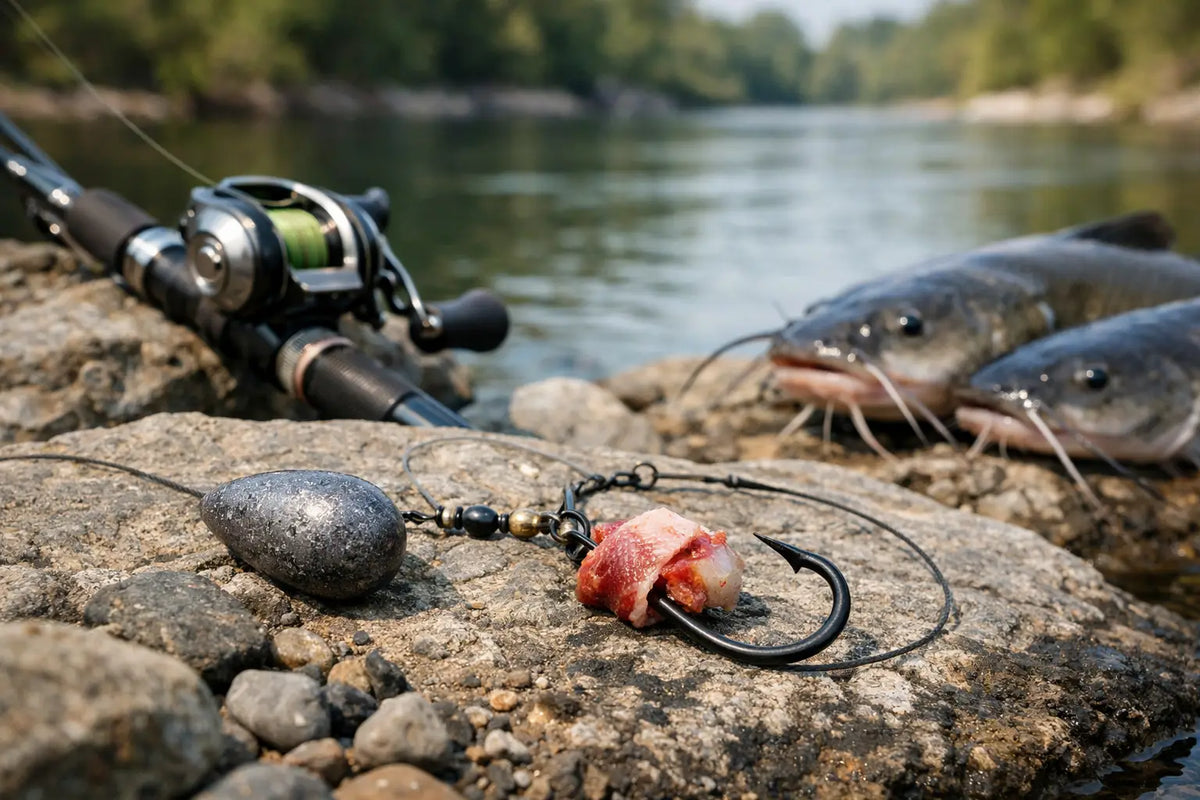
A river catfish bite often happens where the current makes ordinary tackle fail. Your bait rolls downstream, the line bows hard, and a light sinker turns a promising seam into a tangle. A dependable catfish rig for river fishing solves that problem by holding bait near the bottom while still letting a catfish pick it up naturally.
For most anglers, the best starting point is a sliding sinker rig with a strong leader and a circle hook. It is simple to build, easy to adjust for changing current, and effective for channel cats, blue cats, and flatheads. The details matter, though. River flow, snag density, target species, and bait size should all influence the final setup.
The Best All-Purpose Catfish Rig for River Fishing
A Carolina-style sliding sinker rig is the practical all-around choice. Main line runs through a no-roll or egg sinker, then connects to a swivel. A separate leader runs from the swivel to the hook. This layout keeps most of the weight away from the bait and gives a feeding catfish less resistance when it moves off with a bait.
Use a no-roll sinker when possible. Its flat, shaped profile is designed to resist rolling in current better than a round egg sinker. In slow water or protected backwaters, an egg sinker can work well. In a hard main-channel flow, the no-roll style is usually the better call.
A solid baseline setup includes 30- to 50-pound braided main line, a barrel swivel, a 12- to 24-inch leader, and a 5/0 to 8/0 circle hook. For modest rivers and average channel cats, lighter line and smaller hooks are plenty. Move up to 50- to 80-pound line, heavier hardware, and 8/0 to 10/0 hooks when trophy blue cats, large flatheads, thick cover, or powerful current are part of the plan.
Build the Rig Step by Step
Start by sliding your sinker onto the main line. Add a bead if you want to protect the knot from repeated contact with the weight, then tie the main line to one eye of a barrel swivel. Tie your leader material to the other eye, then attach the circle hook.
The leader is where anglers often overcomplicate things. A 12- to 18-inch leader is a reliable choice around wood, rock, bridge riprap, and other snag-heavy bottom. The shorter length limits how far the bait can drift into trouble. Extend it to 24 inches or more in cleaner water when you want bait to move a little more naturally behind the sinker.
Keep knots simple and trustworthy. A Palomar knot works well for braid, while an improved clinch knot or uni knot can be a good option with mono or fluorocarbon leader. Test every knot by pulling it firmly before the rig reaches the water. A weak knot is especially costly when a big fish uses the current to its advantage.
Circle hooks are a strong fit for this rig because they commonly catch in the corner of the mouth when used correctly. Do not set the hook with a sharp upward swing. Instead, let the rod load steadily, reel down, and apply smooth pressure. This improves hookups and can make catch-and-release handling easier.
Match Sinker Weight to River Current
The right sinker is not the heaviest one in the tackle box. It is the lightest weight that keeps your bait in the chosen zone. Too little weight allows the rig to tumble downstream. Too much weight can bury into soft bottom, hang up in rocks, and make bites harder to feel.
Start with 1 to 2 ounces in a mild current. Move to 3 to 5 ounces for stronger flow, deeper holes, and main-river seams. Some big-river situations may require 6 ounces or more, particularly when fishing from shore across a fast channel. Check the rig after each cast. If it drags right away, increase weight. If it lands and holds without repeatedly snagging, you are close.
Current changes through the day with dam releases, rain, boat traffic, and water level. Bring several sinker sizes rather than committing to one weight. This small piece of preparation keeps you fishing productively instead of fighting the river.
Choose Line, Leader, and Hook for the Fish You Want
Braided line offers strong sensitivity and a smaller diameter, which helps when fishing deep current. It is a smart main-line choice for feeling bottom, detecting subtle bites, and controlling a fish away from cover. Its low stretch can be unforgiving, so use a properly set drag and avoid trying to force a large fish too quickly.
Monofilament has more stretch and remains a useful option for anglers who prefer a little forgiveness during hard runs. It is affordable, easy to handle, and a good match for casual channel catfish fishing. A tough mono leader is often the most practical choice around rocks, shell beds, and wood. Fluorocarbon can be used for leader material, but catfish usually respond more to bait placement, scent, and current than line visibility.
Hook size should match bait bulk, not just fish size. A small piece of cut bait or nightcrawler can sit properly on a 5/0 or 6/0 circle hook. Large chunks of shad, skipjack, or a live bait presentation for flatheads may call for an 8/0 or larger hook. Leave enough hook point exposed to work. A bait ball wrapped tightly around the bend reduces hookups.
Adjust the Rig for Channel Cats, Blues, and Flatheads
Channel cats are adaptable and often feed along current breaks, creek mouths, riprap, and slower edges near deeper water. The standard sliding rig with a moderate leader is ideal. Chicken liver, prepared baits, worms, shrimp, and small pieces of cut bait can all produce, depending on local water and regulations.
Blue cats commonly patrol deep channels, outside bends, confluences, and current seams. Use fresh cut bait, increase sinker weight as needed, and favor sturdy hardware. Fresh shad, skipjack, or locally available baitfish often gives off the scent trail that draws a blue cat to the rig.
Flatheads are more cover-oriented and often favor live prey where legal. Fish tight to logjams, undercut banks, deep brush, and heavy timber, especially during low-light hours. Use a shorter, abrasion-resistant leader and expect snags. The trade-off is clear: the best flathead spots are usually the places most likely to take your tackle.
Fish the Spots That Make the Rig Work
A well-built rig cannot compensate for random casting. Look for places where catfish can hold out of the hardest current but stay close to food moving downstream. Productive examples include the downstream side of bridge pilings, the edge of a deep channel, the inside edge of a bend, and the slack water behind a point or wing dam.
Cast slightly upstream of the target when current is moving hard. Let the sinker settle, then tighten the line only enough to feel the rig. A line that is pulled tight like a clothesline can drag the sinker and reduce bite detection. A controlled amount of line allows the bait to sit naturally while keeping contact with the bottom.
From a boat or kayak, position safely above the target and anchor only where conditions allow. Current, changing water levels, and commercial traffic deserve your full attention. From shore, use a rod holder or secure bank stick and keep the drag set for a hard-running fish. Never leave a baited rod unattended.
Avoid the Small Mistakes That Cost Fish
Old bait is one of the most common reasons a river setup underperforms. Replace washed-out, pale, or scentless bait regularly, especially in strong current. Fresh bait creates a better scent trail and stays more appealing when a catfish reaches it.
Also check the hook point after every snag, fish, or hard impact with rock. A circle hook that feels dull or catches poorly on a fingernail should be replaced. Carry extra swivels, leaders, hooks, and sinkers so a broken rig does not end the session.
Before heading out, confirm local rules on hook types, baitfish, live bait, size limits, and harvest. River systems can have different regulations than nearby lakes. A few minutes of planning helps protect the fishery and keeps your trip focused on the water.
Adventure Cove Store makes it easier to prepare with fishing tackle, lighting, outdoor storage, and practical gear for longer days on the bank. Build a few rigs before you leave, label the sinker weights, and keep them ready in a tackle organizer. When the current shifts and the bite turns on, being prepared is what keeps your bait in the strike zone.
Shop this guide


Free shipping on all orders within the United States.