
Day Hiking Backpack vs. Multi-Day Pack: How Your Trip Length Changes Everything
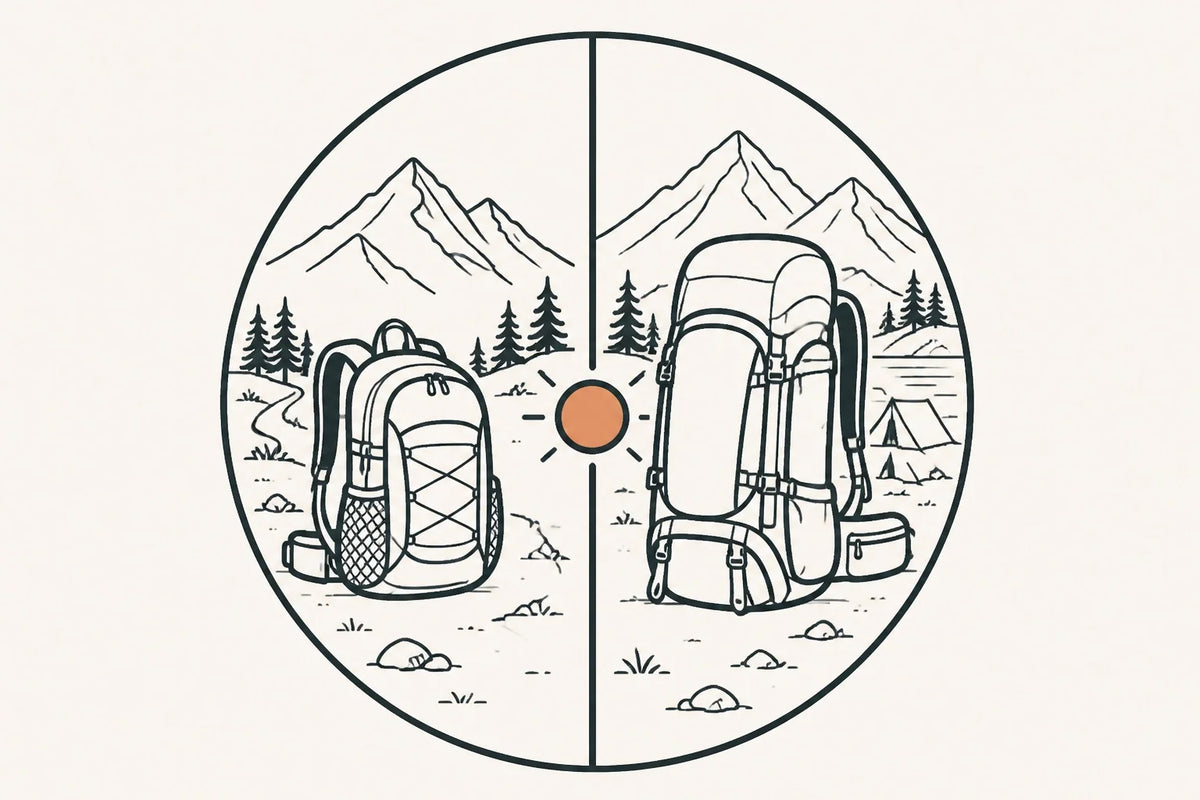
You lace up your boots, fill a water bottle, and realize you have no idea which backpack to grab. Sound familiar? Choosing the right pack is one of those decisions that looks simple on the surface but can quietly make or break your entire trip.
Here's the thing: the difference between a day hiking backpack and a multi-day pack goes way beyond just stuffing more gear in a bigger bag. It's a completely different piece of equipment, built around a completely different set of needs. Grab the wrong one and you're either lugging around unnecessary weight on a quick trail, or you're limping back to the car because your shoulders gave out after hour two of an overnight.
This guide is written specifically for beginners who want to stop guessing and start choosing with confidence. We'll break down exactly what separates day packs from multi-day packs, walk through the features that actually matter, cover that tricky middle ground around 30 to 35 liters, and help you match the right bag to your real-world trips. By the end, you'll know exactly what you need before you ever set foot in a gear store.
The Real Difference Isn't Just Size
Most people think upgrading from a daypack to an overnight pack just means grabbing a bigger bag. It doesn't. The structural design changes completely once your trip length crosses that overnight threshold.
A day hiking backpack is built for one job: keep things light and accessible for a few hours on trail. Minimal padding, little to no frame, quick-access pockets. Adding an internal frame or a load-transfer hip belt to a 4-hour hike would just be dead weight you're hauling for no reason.
Multi-day packs are a different animal entirely. They're engineered around suspension systems designed to carry substantial loads comfortably over full days of sustained movement, shifting load from your shoulders into your hips and legs where your body handles it best.
This is where the over-buying/under-buying problem shows up. A 20L daypack leaves an overnight camper without room for a sleeping bag, shelter, or a camp stove. A 65L expedition pack punishes a day hiker with unnecessary bulk and weight on a simple trail loop.
The fix is straightforward: match the pack to the actual trip. The Naturehike hiking backpack is suitable for multi-day adventures where that structural support genuinely earns its place. The sections ahead break down exactly where each pack type belongs.
What a Day Hiking Backpack Actually Fits (and What It Doesn't)
So, what does a day hiking backpack actually hold? In practical terms, 15L to 35L is the daypack sweet spot. That range comfortably fits a water bottle or reservoir, trail snacks, a rain jacket, sunscreen, and a basic first-aid kit without strapping a small apartment to your back.
Because a realistic day kit stays light enough that a framesheet is all the structure you need, daypacks skip the internal frame entirely. A simple back panel keeps the load close to your spine, and that's enough. No aluminum stays, no framesheet, just a snug, lightweight carry that doesn't fight you on the trail.
Access is intentionally simple. Most daypacks use a top-loading or wide panel-zip design so you can grab what you need without unpacking everything. You're reaching for a headlamp or a snack bar, not reorganizing a week's worth of gear.
Feature-wise, think functional minimalism: a hydration sleeve for a basic reservoir, a few zippered pockets, trekking pole loops, and sometimes an ice axe attachment on more technical builds. Check the product specifications on any pack you're considering to confirm which attachments are included.
On price, entry-level options start around $40, which makes testing the hobby easy before committing. Premium builds with technical fabrics can push well past $100.
One safety point worth repeating: even a short hike deserves the Ten Essentials packed inside. Navigation, sun protection, insulation, illumination, first-aid supplies, fire-starting, repair tools, food, water, and emergency shelter all belong in that bag, regardless of how quick the outing looks on paper.
What Changes When You Add a Night (or Three)
Add a sleeping bag, shelter, camp stove, and three days of clothing, and a 35L daypack runs out of room fast. That's why overnight and multi-day packs start at roughly 40L and scale to 70L or more for longer expeditions. The extra volume isn't padding; it's accounted for by real gear with real bulk.
The bigger shift isn't capacity, though. It's structure.
Internal frames change everything. Aluminum stays or a rigid framesheet run vertically through the back panel, channeling load weight down from your shoulders, through a padded hip belt, and into your legs. Your legs are far stronger than your shoulders and neck over sustained miles.
On a properly fitted overnight pack, the majority of the total load rides on your hips, not your shoulders. That's what lets people carry heavy loads through a full day on trail without arriving at camp wrecked.
Organizational design also gets more intentional. A dedicated sleeping bag compartment sits at the bottom. Side-access zippers let you reach mid-pack items without unpacking everything. Lid pockets and external lash points handle sleeping pads, wet rain gear, or anything you need within reach.
Hydration integration steps up too. Instead of a basic sleeve, look for internal hose routing channels that keep the drinking tube accessible even with a rain cover on.
One safety note worth taking seriously: a poorly fitted multi-day pack puts real stress on your lower back. Always fit in this order: hip belt first, shoulder straps second, load lifters third. Get that sequence right before you hit the trail.
What does your next trip need?
Day Pack vs. Multi-Day Pack: Feature by Feature
Here's a side-by-side breakdown so you can see exactly where the two categories split:
Feature |
Day Hiking Backpack |
Overnight / Multi-Day Pack |
|---|---|---|
Volume |
15–35L |
40–70L+ |
Frame |
None or minimal back panel |
Internal frame (stays or rigid framesheet) |
Hip belt |
Thin stabilizer strap |
Padded load-transfer belt with pockets |
Access |
Top-load with a few pockets |
Bottom compartment, side zippers, lid pockets |
Hydration |
Basic reservoir sleeve |
Internal channel, routed hose port, clip points |
Pack weight |
Under ~1 lb at the ultralight end (varies by build) |
Noticeably heavier due to frame and hip belt hardware |
Price |
$40 up to ~$150–200 for premium builds |
$150–$400+ (varies widely by suspension system) |
A few of those rows deserve a quick note.
Frame and hip belt go together. On a day pack, the stabilizer strap just keeps the bag from swinging. On an overnight pack, the padded hip belt is structural, working with the frame to move weight off your shoulders. You can't swap one style for the other and get the same result.
Access design reflects how you actually use the pack. On a day out, a single top-loading compartment is fast and simple. Over multiple days, you need to reach your sleeping bag without unpacking everything above it, which is exactly what the bottom compartment solves.
The price gap reflects real differences in suspension hardware and materials. Buying a cheap overnight pack to save money usually means a painful hike.
The Gray Zone: When a 30-35L Pack Does Both Jobs
The feature comparison above draws a clean line, but one volume range deliberately blurs it: 30 to 35 liters.
A pack in this range can work as a roomy daypack hiking backpack or a stripped-down overnight bag, depending entirely on what you're carrying. The deciding factor isn't the pack; it's your gear system.
Ultralight backpacking is a system mindset, not a product category. A 32L bag handles an overnight trip only if your shelter, sleep system, and clothing are all genuinely light. Think tarp instead of a tent, a down quilt instead of a bulky synthetic bag, and cold-soaked meals instead of a stove. Swap in a traditional ultralight hiking and backpacking tent and your volume math changes fast.
If you're packing standard gear, a 30L pack will leave you strapping things to the outside and hoping for the best. For non-ultralight overnight trips, 40L is the practical floor, full stop.
Not sure where you land? Before buying, lay every item on the floor and roughly estimate total volume. Packing cubes help you visualize fit without committing.
Adventure Cove Store carries packs across this entire spectrum. If you're in the gray zone, browse both the daypack and overnight sections to see which features your actual kit demands.
Fit Matters More Than Volume: Torso Length and Gender-Specific Designs
Once you've settled on the right volume, make sure the bag actually fits your body, because a pack that rides wrong is uncomfortable at best and a safety hazard at worst.
Torso length, not your overall height, is the measurement that matters. Find the bony bump at the base of your neck (your C7 vertebra) and measure straight down to the top of your hip bones (the iliac crest). Match that number to the manufacturer's sizing chart before buying. According to Backpacker Magazine's pack fit guide, torso length is the core measurement fitters use first, and a hip belt that sits too low forces your lower back to carry load it was never meant to handle.
Women's-specific packs are typically built with shorter back panels, narrower shoulder straps, and hip belts contoured for a different hip-to-shoulder ratio -- features most brands describe as functional rather than cosmetic. That said, gender labeling is a starting point, not a guarantee. A woman with a longer torso may fit better in a men's small than a women's medium. Always measure; never assume.
On overnight packs, don't overlook the load lifter straps, the angled straps running from the top of your shoulder harness toward the top of the frame. Snugging these on climbs pulls the pack against your center of gravity, reducing swaying and strain.
Before any multi-day trip, do a loaded test walk near home. Hip pressure points, shoulder hotspots, and back discomfort are simple to fix with strap adjustments in your driveway. They're miserable to troubleshoot eight miles into a backcountry trail.
Real-World Scenarios: Match Your Trip to the Right Pack
Once you've nailed the fit, the final question is simple: what trip are you actually taking?
Scenario 1: 4-mile loop, no overnight. A 20–25L day hiking backpack is all you need. Load it with water, snacks, a rain jacket, a basic first-aid kit, and your Ten Essentials. No frame required.
Scenario 2: Half-day trail with kids or extra gear. Step up to a pack in the 28–35L range with a hip stabilizer strap. The extra volume absorbs kids' layers, additional snacks, and a bulkier first-aid kit without dumping all that weight onto your shoulders.
Scenario 3: One-night trip with standard gear. A 40–50L pack with an internal frame and padded hip belt is the minimum. A tent, sleeping bag, pad, stove, and two days of food fill this range faster than most beginners expect.
Scenario 4: 3-to-5-day backcountry trip. Move to 55–65L. Load-transfer suspension becomes essential here, and a hip belt with pockets keeps snacks and your phone accessible without stopping to dig through your pack.
Scenario 5: Ultralight one-nighter. A 30–35L hiking backpack handles a single night only with a genuinely ultralight kit -- light shelter, light sleep system, minimal cooking. Standard gear will overflow it.
One safety rule spans every scenario: carry a whistle and a navigation tool regardless of pack size. A whistle weighs almost nothing and could be the most important thing in your bag.
Pack Materials: What Holds Up Over Miles vs. What's Fine for a Day Out
Once you've matched your pack to your trip type, fabric is worth a few minutes of your time.
Daypacks typically use lighter denier nylon or ripstop polyester. That's plenty tough for weekly trail use on maintained paths but not designed for seasons of backcountry punishment.
Overnight and multi-day packs step up to heavier denier nylon, which handles heavier loads and rougher contact without wearing through. At the ultralight end, Dyneema composite fabric (formerly Cuben Fiber) offers exceptional strength at minimal weight, but Dyneema packs carry a significant price premium.
Seam construction matters more on overnight packs. Look for bar-tacked stress points, reinforced lash loops, and welded or taped seams. A pack regularly carrying heavy loads through wet conditions needs that structure where it counts.
A hiking backpack light enough for casual days simply doesn't face the same abrasion demands as one dragged across talus fields or soaked repeatedly overnight.
Before you buy, check the warranty. Reputable pack makers offer lifetime or long-term defect coverage. That matters far more on a premium overnight pack than on an entry-level daypack, and it signals how much faith a brand puts in its own specifications and construction.
The Right Pack Is the One That Matches Your Actual Trip
Materials hold up. Now let's make sure the pack itself is the right choice from the start.
Choosing between a day hiking backpack and a multi-day pack isn't a volume decision. It's a structural one. Frames, load-transfer hip belts, organized access zones, and hydration routing exist because overnight trips place different physical demands on your body.
Three decisions cut through the noise:
Map your longest planned trip before you shop. A sleeping bag, shelter, pad, and two days of food will swallow a 35L pack before you've added a dry layer.
Get measured for torso length and check the manufacturer's fit chart.
If you're in the 30–35L gray zone, let your gear system decide. A 32L pack works overnight only with a genuinely lean kit; standard gear calls for 40L as the practical floor.
Adventure Cove Store carries hiking packs across the full range, from lightweight daypacks to full-suspension overnight rigs. A good starting point for any trail kit is something ideal for building out your Ten Essentials before you ever leave the trailhead. Browse the hiking gear section to find the pack that fits where you're actually going.
Conclusion
The right pack comes down to one honest question: what does your trip actually demand?
Three decisions define your choice: know your trip length before you shop, get measured for torso fit, and build your gear list before choosing volume.
A pack that fights your body or runs out of room halfway through day two is the wrong tool, regardless of price or reviews.
Browse Adventure Cove Store's hiking pack range, find your fit, and head into the trail knowing your gear is ready for every mile you've planned.