
How to Secure Home While Traveling: 2026 Checklist
Table of Contents
- Assess Your Risks Before You Pack
- Best Home Security Cameras for Travelers
- How to Make Your House Look Occupied While Away
- Fortify Entry Points and Perimeter
- Secure Your Digital Life and Network
- The Vacation Home Security Checklist
- Finalize Emergency Protocols and Insurance
- Frequently Asked Questions
Last Updated: September 7, 2026
Assess Your Risks Before You Pack
Learning how to secure home while traveling starts long before you zip your suitcase. Walk through your property with fresh eyes, thinking like someone who might want to get inside. The homes that get broken into are the ones that look unoccupied and unguarded.
Start by auditing your vulnerabilities. Walk the perimeter and note every potential entry point, from ground-floor windows to garage doors. Check that all exterior lighting works and consider whether bushes or trees provide cover near entrances. This risk assessment takes less than an hour.
Most break-ins are crimes of opportunity, so your job is to make your home look like the hardest target on the block.
Best Home Security Cameras for Travelers
Choosing the right camera is only half the battle; configuring it for remote security is where most travelers fall short. A camera is only as secure as the network it sits on.
Start with physical placement. A doorbell camera covers your main entry but has a blind spot directly above it; an indoor camera aimed at a window or secondary door covers that gap. For outdoor coverage, position cameras at the corners of your home, roughly 8 to 10 feet off the ground, angled downward, to prevent tampering and capture a face rather than the top of a hat.
Before you leave, verify three settings on every camera:
- Two-factor authentication (2FA) is enabled on the camera app and the associated email account. Without 2FA, a stolen password gives a hacker live access to your feeds and two-way audio.
- Firmware is updated to the latest version. Manufacturers like Ring, Arlo, and Wyze regularly patch vulnerabilities; an outdated camera is a known entry point into your home network.
- Motion zones are set to cover your property line, not the public sidewalk. This reduces false alerts and ensures you are notified only for activity that matters.
A unique angle most guides ignore is the network segmentation strategy. If your router supports it, put all IoT devices, cameras, smart locks, smart plugs, on a separate VLAN or dedicated guest network. This isolates them from your main computers and phones, so a compromised camera cannot pivot to your laptop or personal files. Most modern routers from Eero, TP-Link, and Netgear offer this under settings labeled "guest network" or "IoT network."
Another overlooked setting is cloud recording vs. local storage. Cloud storage means footage is accessible from anywhere but requires a subscription fee and internet connection. Local storage on an SD card is free and works offline, but a thief can take the camera and card with it. The best approach for travelers is hybrid: use cloud recording for doorbell and entry cameras, and local storage for interior cameras less likely to be stolen.
Finally, test the remote view before you leave. Open the app from your phone on cellular data, not Wi-Fi, and confirm you can see each camera feed. This catches dead batteries, offline cameras, and misconfigured network settings while you are still home to fix them.
How to Make Your House Look Occupied While Away
An empty house is a target. Making your home look lived-in is one of the most effective ways to secure home while traveling, and it doesn't require expensive equipment.
Smart lighting is your best ally here. Set indoor lights on timers that mimic your normal routine, turning on in the evening and off at bedtime. Smart plugs can automate lamps and small electronics, creating the appearance of activity throughout the day. Stagger the timers across different rooms so the whole house doesn't light up at once.
Beyond lighting, think about the external signs of absence. A full mailbox is a dead giveaway, so use the USPS mail hold service or ask a trusted neighbor to collect mail and packages daily. USPS mail hold instructions Let your lawn go unkempt for a week or two, or arrange for a neighbor to mow it. The goal is to eliminate any visual cue that screams "nobody's home."
Fortify Entry Points and Perimeter
The physical security of your doors and windows is your first line of defense. Most break-ins happen through ground-floor doors and windows, so prioritize these entry points.
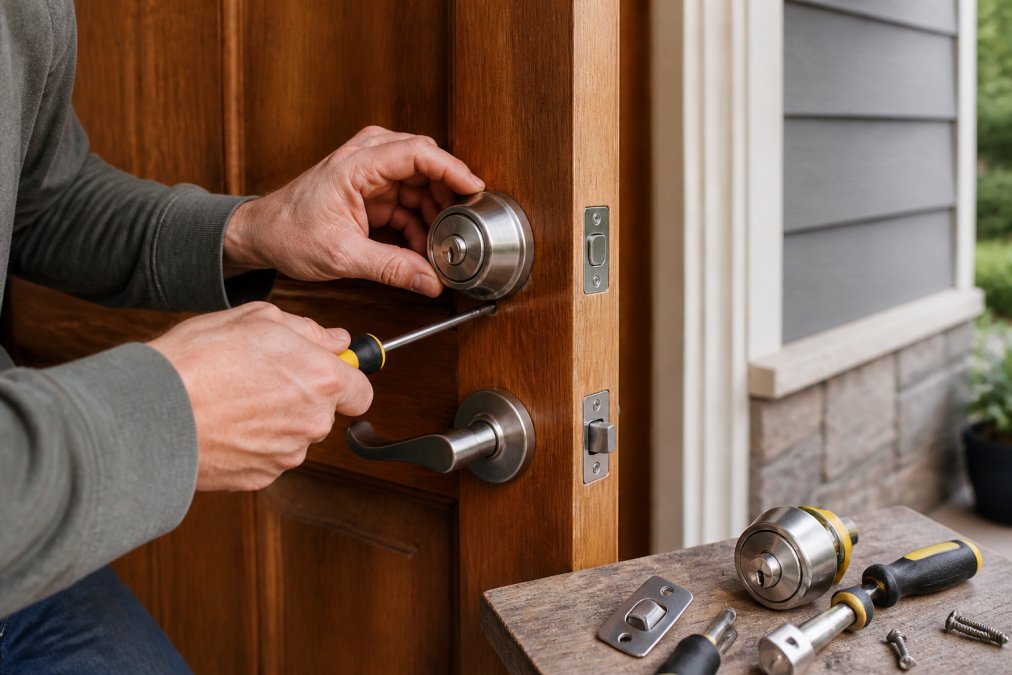
Deadbolts are non-negotiable. Install Grade 1 or Grade 2 deadbolts on all exterior doors, and reinforce the strike plates with longer screws that bite into the door frame. Sliding glass doors are a common weak spot; place a dowel or security bar in the track to prevent them from being forced open. Window locks should be checked and replaced if they're worn, and consider adding security film to ground-floor windows for extra resistance.
Your perimeter matters just as much as your doors. Motion-activated floodlights are one of the most effective deterrents available, since burglars avoid well-lit areas. DOJ guidance on residential burglary prevention Trim back shrubbery near entrances to eliminate hiding spots, and make sure your fence gates are locked. If you have a smart lock, verify that it auto-locks and that you haven't shared codes with people who no longer need access.
Secure Your Digital Life and Network
Home security extends beyond physical locks. Your Wi-Fi network is the backbone of your smart home devices, and a compromised network can disable your cameras, locks, and alarms.
Before you leave, change your router's admin password if you haven't recently, and make sure your Wi-Fi is encrypted with WPA3 or at least WPA2. Disable WPS, which is a known vulnerability, and consider setting up a separate guest network for visitors. Update the firmware on your router and all connected devices.
Your digital footprint also matters. Avoid posting travel plans or photos on social media until you're back home. FTC advice on travel and social media safety Even a delayed post can tip off someone who knows your patterns. If you have a house sitter, give them their own network credentials rather than sharing your main password, and revoke access the moment your trip ends.
The Vacation Home Security Checklist
A reliable checklist turns scattered tasks into a repeatable routine. But the right checklist depends on how long you will be gone. A weekend trip and a month-long sabbatical pose different risks.
Weekend Trip (2-3 Nights)
For a short absence, the goal is to eliminate obvious cues and maintain normalcy:
- Hold mail or ask a neighbor to collect it daily. A pile of mail is the fastest way to signal an empty house.
- Set interior lights on a timer to match your usual evening routine. A single lamp in the living room and one in a bedroom is usually enough.
- Lock all windows and doors, including the garage entry. Double-check sliding doors and the door from the garage to the house.
- Arm your alarm system and confirm you receive push notifications on your phone.
- Unplug small appliances like coffee makers and toasters to eliminate fire risk.
- Do not post about your trip on social media until you return.
Extended Absence (1-2 Weeks)
Once you cross the one-week mark, the risks shift:
- Arrange for lawn care or ask a neighbor to mow and water plants. An overgrown lawn is a clear signal of absence.
- Put a hold on newspaper delivery in addition to mail. A stack of newspapers is a dead giveaway.
- Set your thermostat to 55 degrees in winter or 85 in summer to protect pipes and prevent humidity damage.
- Turn off the water main if you are leaving for more than a week. This prevents catastrophic damage from a burst pipe while you are unreachable.
- Ask a neighbor to park in your driveway occasionally or move your car if it is parked outside. A stationary car for two weeks is a visual cue.
- Review your insurance policy for vacancy clauses. Some homeowners policies have limitations if the home is vacant for more than 30 days, but even a two-week absence may require notification for certain riders.
Month-Long Absence (30+ Days)
For a month or more, you are entering "vacancy" territory in the eyes of many insurers:
- Contact your insurance agent before you leave. Most standard homeowners policies cover a home that is vacant for up to 30 days, but after that, coverage may be reduced or voided. You may need a vacancy endorsement or a separate policy. This is a conversation to have before departure, not after a loss.
- Unplug all non-essential electronics and consider turning off the main breaker except for critical circuits like the refrigerator and alarm system. This eliminates surge risk and standby power draw.
- Drain outdoor hoses and shut off exterior water valves to prevent freezing damage.
- Arrange for a house sitter or a professional check-in service to visit at least twice a week. A month is too long for a home to go unvisited.
- Set up a mail forwarding order with USPS rather than just a hold, if you will not have someone collecting mail regularly.
- Take a full inventory of valuables with photos and serial numbers, and store it in the cloud. This is essential for any insurance claim.
The Universal Pre-Departure Checklist
Regardless of trip length, run through this final sequence on the day you leave:
| Task | Purpose |
|---|---|
| Walk every room and close all windows | Eliminate entry points |
| Lock sliding doors with a dowel or security bar | Reinforce weak points |
| Test smart locks and confirm auto-lock is enabled | Prevent lockout and secure entry |
| Arm alarm system and verify mobile alerts | Ensure remote monitoring works |
| Check camera feeds from your phone on cellular data | Confirm remote access |
| Unplug small appliances and space heaters | Reduce fire risk |
| Turn off water main (for absences over one week) | Prevent water damage |
| Set thermostat to 55°F in winter / 85°F in summer | Protect pipes and interior |
| Take out trash and remove perishables | Prevent odors and pests |
| Lock the garage door and any secondary entrances | Close every access point |
Finalize Emergency Protocols and Insurance
The final layer of preparation is about what happens if something goes wrong despite your efforts.
Designate a primary contact who lives nearby and has a key to your home. This person should know your alarm code and how to reach you. Leave them with your itinerary and a list of emergency contacts, including your insurance agent. If you have a house sitter, make sure they know who to call for different scenarios: the police for a break-in, a plumber for a water leak, you for anything unusual.
Review your homeowners or renters insurance policy before you travel. Most policies cover theft and vandalism, but there are often limits on high-value items like jewelry, electronics, and artwork. Insurance Information Institute guidance on home inventory If you own valuables that exceed those limits, you may need a rider or separate policy. Take photos of your valuables and store them in the cloud as a digital inventory; this makes filing a claim far easier if the worst happens.
Securing your home while traveling is about preparation, not paranoia. Work through your risk assessment, fortify your entry points, automate your lighting, and confirm your emergency protocols, and you can leave with genuine peace of mind.
Adventure Cove Store understands the full cycle of travel: going out, being away, and coming home. We curate gear for coastal weather and real outdoor use, and our range of home security cameras is designed to perform in changing conditions, just like our kayaks and camping equipment. Shop Cove Picks and get your home travel-ready.
Frequently Asked Questions
What houses do burglars avoid?
Burglars typically avoid homes that look occupied and have visible security measures. Properties with active security cameras, motion-sensor lighting, and signs indicating an alarm system are less appealing. Homes with unkempt yards, piled-up mail, or no lights on timers signal an empty house. Making your home look occupied while away is a strong deterrent. Simple steps like using smart lighting and having a neighbor park in your driveway can make a difference.
Should I leave lights on when I go on vacation?
Leaving lights on 24/7 is not effective, as it signals an empty home during the day and wastes energy. Instead, use smart plugs or timers to simulate occupancy. Set lights to turn on in the evening in different rooms, like the living room and bedroom, to mimic normal activity. Smart lighting can also be controlled remotely, allowing you to adjust schedules on the fly. This approach is more realistic and helps secure your home while traveling.
How can I monitor my home security while traveling?
The best home security cameras for travelers offer remote monitoring via a smartphone app. Look for features like live HD video, two-way audio, and motion detection alerts. Place cameras at main entry points like the front door and backyard. Many systems allow you to check in on your property in real-time from anywhere. Pairing cameras with a monitored alarm system adds another layer of protection, ensuring authorities are notified if an alarm triggers.
Where do most burglars enter the home?
Most burglars enter through the front door, often by kicking it in or picking a weak lock. The back door and first-floor windows are also common entry points. To secure home while traveling, reinforce these areas with heavy-duty deadbolts and window locks. A smart doorbell camera at the front entrance and motion sensors covering the backyard can deter intrusions. Sliding glass doors are vulnerable, so place a rod in the track to prevent them from being forced open.
How do I protect my house while on vacation?
Protecting your house involves a multi-layered strategy. Place a mail hold with the USPS and pause package deliveries to avoid pile-up. Use smart plugs to turn lights and a radio on and off, making the house look occupied. Ask a trusted neighbor to collect any stray flyers and park in your driveway. Activate your home security system and ensure all doors and windows are locked. Reviewing your insurance policy to confirm coverage for theft while you are away is also important.
Shop this guide


Compare all 213 outdoor goods →
Free shipping on all orders within the United States.