
Kayak vs Canoe: Which One Fits Your Trip?
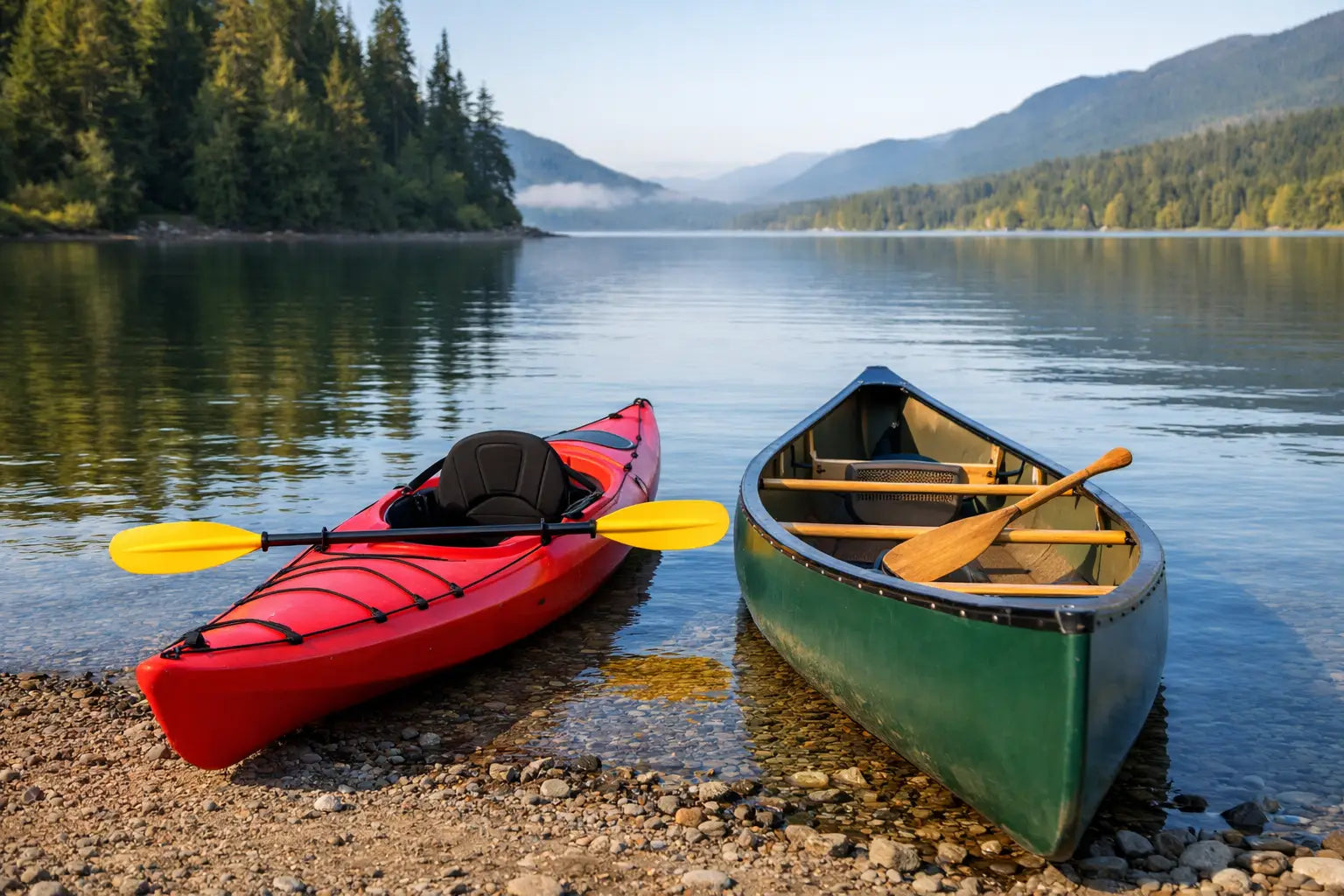
A calm lake can make any boat look easy to choose. The decision gets more practical when you picture loading a cooler, bringing a child or dog, casting near shoreline cover, or paddling into a headwind on the way back to the launch. In the kayak vs canoe decision, the better boat is the one that fits your water, passengers, gear load, and confidence level.
Both craft can turn a free Saturday into a fishing trip, a campsite shuttle, or a quiet family outing. Their designs solve different problems. A kayak generally prioritizes efficiency and a lower seating position. A canoe typically offers open space, flexible seating, and easier access to the gear you bring along.
Kayak vs canoe: the design difference
A traditional kayak has a closed or partially closed deck, with the paddler seated low to the water. Most are moved with a double-bladed paddle. Sit-inside kayaks place your legs beneath a deck and often include a cockpit rim for a spray skirt. Sit-on-top kayaks keep the deck open and make it easier to get on and off the boat.
A canoe is open from bow to stern and is usually paddled with a single-bladed paddle. Its raised seating position gives paddlers more room to shift, reach gear, and bring another person aboard. Canoes can be solo paddled, but they are especially effective with two people sharing the work.
Neither design is automatically better. A recreational kayak can feel easier for one adult to control, while a canoe can make more sense for two adults packing food, dry bags, and camp equipment for a weekend away.
Quick comparison: kayak vs canoe
| Feature | Kayak | Canoe |
| --- | --- | --- |
| Typical paddler position | Low, with legs extended | Higher, kneeling or seated on a bench |
| Paddle style | Double-bladed | Single-bladed |
| Best passenger setup | Usually one person, with tandem options | One to three people, depending on capacity |
| Gear access | Hatches, tank wells, and deck storage | Open interior for coolers, bags, and bulky cargo |
| Wind performance | Often better due to lower profile | Can catch more wind, especially when lightly loaded |
| Getting in and out | Sit-on-top models are easiest | Easy from a dock or shallow shoreline |
The comparison shifts by model. A wide fishing kayak may be more stable but slower than a narrow touring kayak. A compact recreational canoe will handle very differently from a long expedition canoe loaded with camping equipment. Check the stated weight capacity, hull width, length, and intended water type before choosing.
Choose a kayak when control and solo paddling matter
A kayak is often the practical pick for one person who wants to get on the water without coordinating a second paddler. The double-bladed paddle keeps power available on both sides, which can make steering feel more intuitive for beginners. It also helps maintain momentum when a breeze picks up.
For day trips and fitness paddling
If your goal is covering a few miles around a lake, protected bay, or slow river, a kayak usually feels efficient. The lower paddling position reduces exposure to wind, and the boat's hull can track well over open water. This makes a kayak a strong option for active paddlers who want a repeatable after-work workout as much as a weekend escape.
Sit-inside models add protection from splashes and cool weather. Sit-on-top models favor warm days, swimming breaks, and simple entry from a beach or dock. For beginners, a wider recreational kayak offers a reassuring platform, though it will not move as quickly as a narrower touring design.
For fishing from a compact setup
Fishing kayaks are designed around access. Many include wide, stable hulls, rod holders, gear tracks, storage wells, and room for a tackle crate or cooler. Anglers who fish alone may appreciate being able to launch from smaller access points where handling a larger boat would be inconvenient.
The trade-off is space. Even a high-capacity kayak requires disciplined packing. A cooler, safety equipment, tackle, and a personal flotation device can fill available storage faster than expected. Confirm that the listed capacity accounts for your body weight and every item you plan to carry, not just the catch coming home.
Choose a canoe when people and cargo come first
A canoe earns its place when the trip involves more than one paddler or more than a modest amount of equipment. The open hull makes it easy to bring a cooler, folding seats, a waterproof tote, a dog, or a child's gear without trying to fit everything through a hatch.
For family outings and shared paddling
A tandem canoe lets two adults paddle together, with room for a child in the center when capacity allows. That layout gives families flexibility that is hard to match with separate single kayaks. One experienced paddler can steer from the stern while a newer paddler learns at the bow.
A canoe also simplifies dockside loading. You can place dry bags and lunch where they are easy to reach, then adjust the load for balance. Keep heavier gear low and close to the center of the boat. A bow that sits too high can be difficult to control in wind, while too much weight forward can make the boat plow through the water.
For camping and bulky gear
For an overnight river trip or lakeside camping route, a canoe's cargo space is a real advantage. Tents, sleeping bags, camp chairs, cooking equipment, and a cooler can be packed low in the hull. The key is using waterproof bags or sealed containers because an open canoe exposes gear to rain, paddle drips, and occasional splashes.
Canoes are not automatically less capable on moving water. Many are built for rivers and can handle current well in skilled hands. But a high-sided, lightly loaded canoe can be demanding in strong wind. If your usual water is a large, exposed lake, plan routes close to shore and watch the forecast before launching.
Stability, safety, and comfort are not the same thing
New paddlers often ask which boat is more stable. Width, hull shape, load distribution, and water conditions matter more than the label on the boat. A wide fishing kayak may feel exceptionally steady at rest. A broad recreational canoe can also feel stable, but its higher seat may feel less secure to someone used to sitting near the water.
There are two types of stability to consider. Primary stability is the steady feeling when you first sit in the boat. Secondary stability is how confidently it responds when leaned or tipped on edge. A boat built for speed may feel less stable initially but handle waves and turns more predictably once you learn its behavior.
Wear a properly fitted personal flotation device every time, even on calm water. Bring water, sun protection, a whistle, and a dry layer for changing conditions. For longer trips, carry a bilge pump or bailer, a paddle leash where appropriate, and a dry bag with a phone, map, and emergency supplies. The right boat helps, but preparation does more to keep a water day safe and enjoyable.
What to check before you buy
Start with storage and transport. A lightweight kayak may be easy for one person to move from garage to vehicle, while a canoe's length can require more planning, a roof rack, and help at the launch. Inflatable models can reduce storage demands, but they need proper drying, inflation, and inspection before every outing.
Next, match capacity to real use. Include the paddler, passenger, personal flotation devices, cooler, fishing gear, and any camping equipment. Do not treat maximum capacity as a comfortable target. Leaving a margin improves freeboard, handling, and safety.
Finally, buy for the trips you will take most often, not the one trip you hope to take someday. A solo angler on protected water may get more use from a stable fishing kayak. A family that spends summer weekends picnicking, paddling rivers, and hauling camp gear may be better served by a canoe. Adventure Cove Store can help you build out either setup with paddles, flotation, dry storage, fishing essentials, and camp gear that fit the plan.
Choose the craft that makes launching feel simple enough to do often. More time on the water builds skill, confidence, and the kind of trip memories no specification sheet can measure.
Shop this guide


Compare all 19 kayak & boat accessories →
Free shipping on all orders within the United States.