
7 Questions to Ask Before Choosing a Security Gear Supplier
Last Updated: October 29, 2026
Quick Summary
The best PreppersGoShop alternative for security gear is a supplier that answers specific questions in writing: product specifications, the exact compliance standard and test reference, return and warranty terms, and stock status. Use the same seven questions on every site you consider, so you can compare suppliers against your own needs rather than against their marketing.
- Check whether each product page lists materials, dimensions, weight and intended use.
- Look for the specific compliance standard and test reference, not just the phrase "meets standards".
- Confirm the return window, exclusions, required item condition and any restocking fee before ordering.
- Find out who honors the warranty and whether it covers normal wear or only manufacturing defects.
- Match the product tier to its role: entry tier for occasional use, professional tier for daily use.
Table of Contents
- Why Shoppers Look for a PreppersGoShop Alternative
- Choosing the Best Tactical Gear Websites: Selection Criteria
- Tactical Gear Categories Worth Comparing: Apparel, Body Armor, Duty Gear and Footwear
- Durability Testing, Compliance Standards and Real-World Performance
- Home Security Gear Essentials Versus Tactical Equipment
- Evaluating Professional Security Equipment Suppliers
- Maintenance, Returns and Warranty Questions to Settle Before You Buy
- Booking Your Next Gear Review With Adventure Cove Store
- Frequently Asked Questions
Why Shoppers Look for a PreppersGoShop Alternative
Shoppers searching for a PreppersGoShop alternative for security gear usually have a specific problem. They may need a different selection, clearer product detail, or a supplier that fits how they actually use their equipment. This guide gives you a framework for comparing any supplier, including Adventure Cove Store, against your own needs.
Most people start looking after a purchase doesn't go as expected. The item may not match the description, the sizing may be off, or the range may not cover what they need in one place. A second supplier then gets added to the search list.
We wrote this guide to help you ask the right questions before you spend money. Seven questions cover selection, durability, categories, support, and fit. Use them with any site on your shortlist.
Choosing the Best Tactical Gear Websites: Selection Criteria
A good tactical gear website earns its place through specifics, not slogans. The problem is that most supplier pages look identical at a glance: a grid of product photos, a few bullet points, and a checkout button. The criteria below are what separate a store you can rely on from one you'll regret ordering from.
1. Specification depth per product page. Look for materials, dimensions, weight, and intended use. Vague claims like "built for anything" tell you nothing about whether an item will hold up.
2. Category coverage versus category depth. A supplier that lists twelve categories but stocks three SKUs in each is a catalog, not a specialist. Count the actual SKUs in the categories you care about.
3. Compliance documentation on the product page, not on request. Check that the product page states the specific standard and test reference that applies to the item (Ballistic Resistance of Body Armor, NIJ Standard 0101.07). If the page only says "meets standards," treat that as no standard at all.
4. Return window and restocking terms in writing. Return details matter: check the return window, any exclusions, the item condition required, and any restocking fee. Read the exclusion list before you add anything to a cart.
5. Warranty length and who honors it. Note which party you would actually contact for a warranty claim and whether the warranty covers normal wear or only manufacturing defects.
6. Contact method and business identity. A verifiable business address and a written response channel matter. If you're buying for a team, ask for a quote in writing.
7. Stock status accuracy. Check whether a store shows stock status clearly before you pay, so you can plan around availability.
Review the return and warranty terms before you order. You should know who covers a defect and how long you have to report it. We discuss these terms in more detail later in this guide.
Tactical Gear Categories Worth Comparing: Apparel, Body Armor, Duty Gear and Footwear
Tactical gear spans several categories, and each one has different criteria. Apparel should be judged on fabric, stitching, and fit for the activity. Body armor and ballistic protection require careful attention to rating and fit, since protection depends on the specific standard and sizing.
Duty gear and utility belts need load-bearing capacity and secure fastening. Footwear should be assessed for support, traction, and comfort over long shifts or trails. Compare these categories separately, because a good supplier in one area may not be strong in another.
Durability Testing, Compliance Standards and Real-World Performance
Durability claims are only useful when the test behind them is published. The framework below lets you separate a tested product from a marketed one.
The standards that actually apply
Compliance is product-specific, and the standard depends on what the item is designed to do. Standards a buyer may encounter include the following:
Durability testing you can ask about
Durability claims are only useful when the supplier explains the test method. Useful questions:
- Abrasion: Was the fabric tested on a Taber abraser or a Martindale machine, and what was the cycle count and weight loss?
- Tear and tensile strength: What test method (for example, ASTM D2261 tongue tear or ASTM D5034 grab tensile) and what result?
- Weather exposure: Was the item tested for UV fading, water repellency (AATCC 22 spray rating), or salt fog (ASTM B117)?
- Hardware: Are zippers YKK, buckles ITW Nexus or Duraflex, and are they rated for the load the belt or vest is designed to carry?
- Illumination: Is the light rated to ANSI/PLATO FL1 (lumens, runtime, beam distance, impact resistance, water resistance)? A light without an FL1 rating is a guess.
Real-world performance versus lab numbers
Match any product to your own conditions. A product tested in dry conditions may behave differently in saltwater, freshwater, or heavy rain. Our products are tested on the water, but you should still confirm the test conditions match where you'll actually use the item.
Budget tier versus professional tier
A useful way to read price is by tier, not by brand:
- Entry tier: adequate for occasional use, home preparedness, and training. Expect imported fabrics, generic hardware, and shorter warranties. Fine for a spare kit; not what you'd issue to a team.
- Professional tier: built for daily or shift-length use. Expect documented fabric and hardware, replaceable components, and a manufacturer warranty measured in years. This is where compliance documentation becomes standard rather than optional.
The mistake is buying entry-tier gear for a mission-critical role, or paying professional-tier prices for gear that will sit in a closet. Decide the role first, then buy to the tier.
The table below summarises the entry-tier and professional-tier distinctions covered in this section, so you can match a product to its role.
| Tier | Typical use | What to expect |
|---|---|---|
| Entry tier | Occasional use, home preparedness, training | Imported fabrics, generic hardware, shorter warranties |
| Professional tier | Daily or shift-length use | Documented fabric and hardware, replaceable components, multi-year warranty |
Home Security Gear Essentials Versus Tactical Equipment
Home security gear and tactical equipment serve different purposes, and many shoppers blur the line. Home security focuses on monitoring, alerts, and deterrence. Tactical equipment focuses on personal carry, protection, and field use.
Essentials for the home often include cameras and alarms. Home security cameras are part of the business's product range.
Decide which category you actually need before you compare suppliers. A buyer who wants home monitoring will be disappointed by a catalog built around tactical apparel, and the reverse is also true.
Evaluating Professional Security Equipment Suppliers
Buyers should look beyond the product list. Check whether any supplier explains product ratings, documentation, and use restrictions, and confirm the site lists a clear contact method.
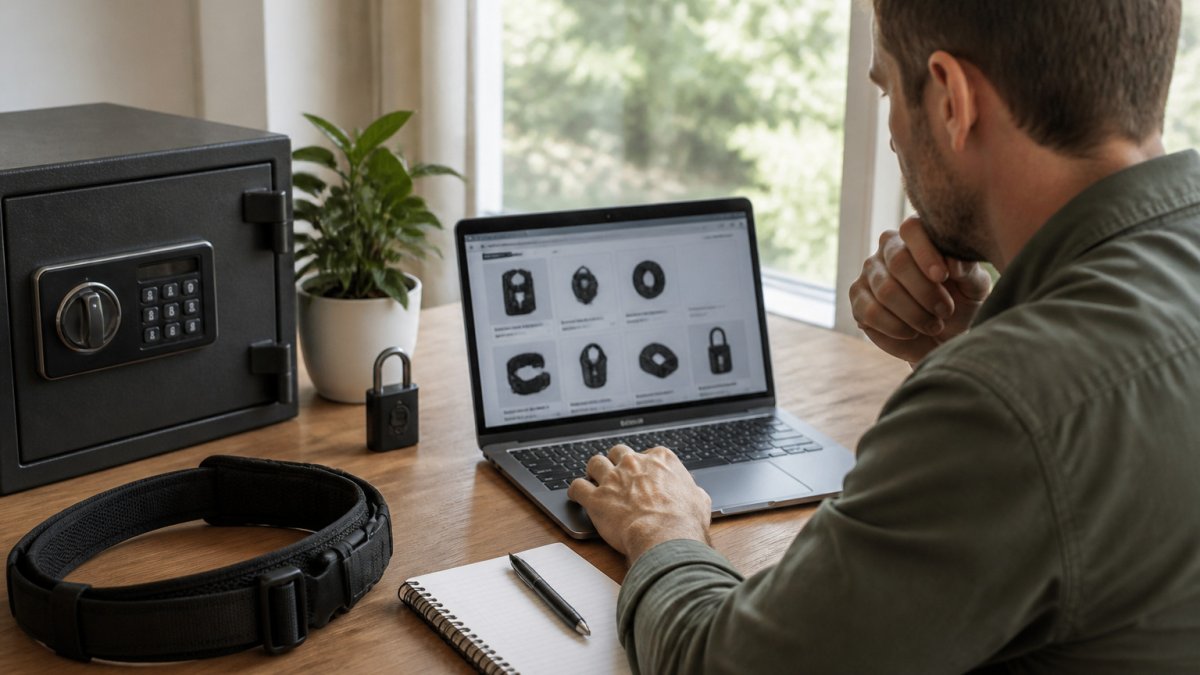
Compare how each supplier handles product questions. A knowledgeable team that answers specific technical questions in writing is a good sign. Be cautious of suppliers who avoid details.
Ask about availability, especially if you buy for a team or business. Written answers help you plan and protect yourself if something changes.
Maintenance, Returns and Warranty Questions to Settle Before You Buy
Before buying, settle these three questions in writing. First, what is the return policy, and what condition must the item be in? Second, what does the warranty cover, and for how long? Third, what care does the product need to stay in good condition?
Maintenance affects how long gear lasts. Fabrics, straps, zippers, and coatings each need different cleaning and storage. Follow the manufacturer's care instructions, and store gear dry and out of direct sun.
Ask about support after the sale as well. Replacement parts and warranty claims depend on the supplier still operating and honoring its terms.
Booking Your Next Gear Review With Adventure Cove Store
If you are ready to compare options, start by browsing the Adventure Cove Picks collection. Use the questions in this guide to evaluate each item before you order.
Adventure Cove Store is built around the full cycle of travel: going out, being away, and coming home. Our range covers water sports, camping, and home security, which gives you one place to research several needs. Check our website for current pricing.
Browse the Adventure Cove Picks collection and compare the specifications against your own requirements. When you are ready to choose, shop Cove Picks →
Frequently Asked Questions
Where can I buy security gear online?
Security gear is sold by specialty tactical retailers, general outdoor and e-commerce marketplaces, and manufacturer direct stores. Specialty retailers usually offer deeper product detail and compliance information, while marketplaces offer wider price comparison. Check each seller for return terms, warranty coverage and clear product specifications before you commit. Adventure Cove Store lists current prices and availability on its website, and pricing depends on quantity, delivery method and selected options, so confirm the total at checkout.
What should I look for when buying security gear online?
Start with the construction specs: materials, load ratings, weather resistance and fit. Confirm whether ballistic items meet recognized standards and whether the seller provides test documentation. Read return and warranty terms, since they matter more when gear fails in the field. Finally, check whether the seller publishes maintenance guidance, which is a good sign that the product is meant for repeated real-world use.
How do I choose between tactical gear and home security equipment?
Choose tactical gear when your need is personal protection, duty use or outdoor durability, and home security equipment when your need is monitoring a property. Many buyers need both, but the criteria differ: tactical gear is judged on load-bearing comfort and weather resistance, while home security gear is judged on alert reliability, false alarm rates and connectivity. Buy each category against its own checklist instead of assuming one store covers both equally well.
Are there reliable online retailers for security uniforms and accessories?
Reliable retailers publish clear sizing charts, fabric and construction details, and return policies they actually honor. They also tell you whether items are rated, tested or certified, and they respond to questions before purchase. Compare two or three sellers on those points, read recent customer feedback about fit and durability, and avoid sellers that list features without specifications.
