
Spinning Versus Baitcasting Reels Explained
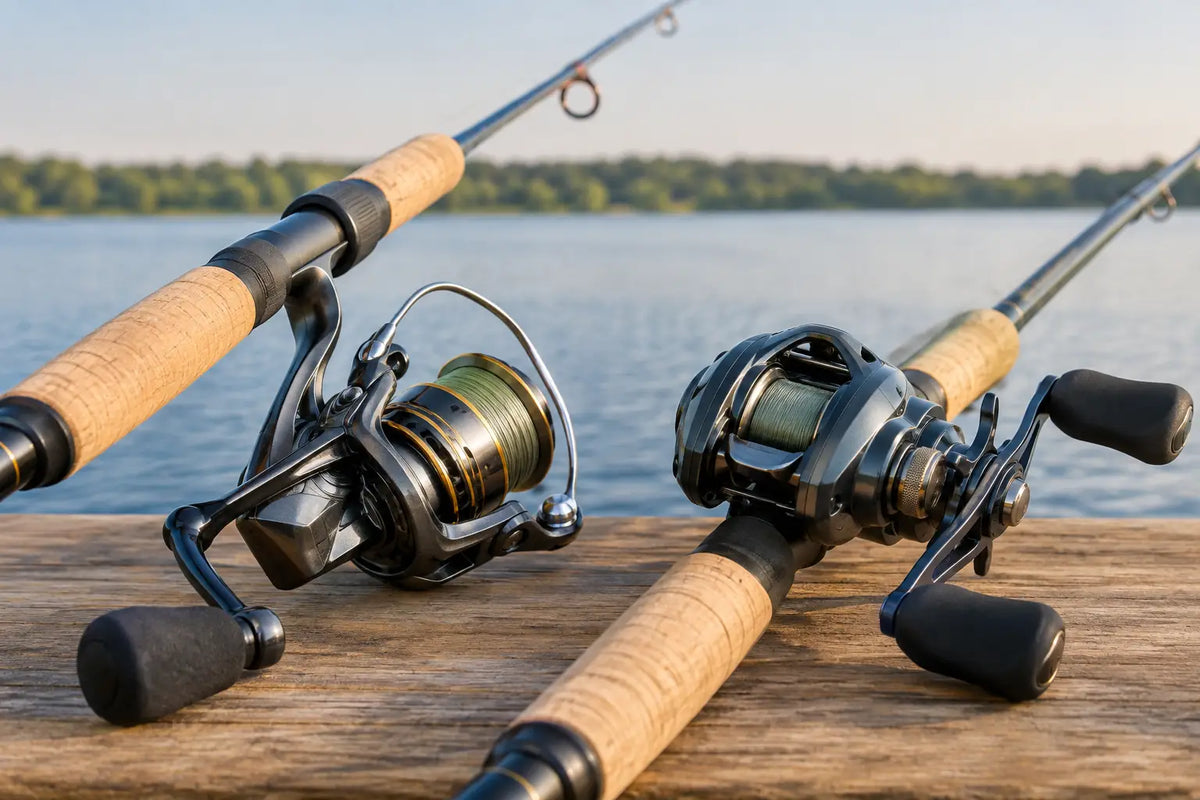
A light lure skipping beneath a dock, a bass pulling hard from shoreline cover, and a kid making their first cast all call for slightly different gear. The choice between spinning versus baitcasting reels affects how far you cast, how well you manage line, and how confidently you can present a lure where fish are holding.
Neither reel type is automatically better. A spinning reel gives most anglers an easier start and handles lightweight presentations exceptionally well. A baitcasting reel offers more direct control and power when heavier lures, thicker line, and accurate placement matter. Match the reel to the fish, water, lure weight, and your current skill level instead of buying based on appearance alone.
How Spinning Versus Baitcasting Reels Differ
The biggest difference is how the spool releases line. On a spinning reel, the spool stays fixed while a bail guides line onto and off of it. Because line can leave the spool freely, a spinning setup casts lighter lures with less effort and fewer line-management problems.
A baitcasting reel uses a rotating spool. During a cast, the lure pulls line while the spool spins. That design provides a direct connection between your thumb, the spool, and the lure, but it also requires brake adjustment and thumb control. If the spool keeps turning after the lure slows down, loose line builds into a backlash, commonly called a bird's nest.
Spinning gear is typically mounted beneath the rod, while a baitcaster sits on top. That changes the feel in your hand, particularly over a long morning of casting. Both can be comfortable, but baitcasting rods are usually chosen for techniques that involve repeated target casting, heavy retrieves, or working fish out of thick cover.
When a Spinning Reel Is the Better Choice
A spinning reel is the practical choice for many beginning anglers because it is forgiving. Open the bail, hold the line with one finger, cast, and close the bail after the lure lands. There is still technique to learn, but an occasional bad cast rarely turns into a major line mess.
It also performs well with light lures and lighter line. Small jigs, inline spinners, soft-plastic worms, live bait rigs, and compact crankbaits are easier to cast on spinning equipment. That makes this setup useful for panfish, trout, crappie, walleye, finesse bass fishing, and inshore applications where a lighter presentation gets more bites.
A 2000- or 2500-size spinning reel paired with a medium-light or medium-power rod is a flexible starting point for freshwater anglers. It can cover pond fishing, creek trips, bank fishing, and many boat days without feeling oversized. For larger freshwater fish, saltwater use, or heavier line, moving up to a 3000- or 4000-size reel adds line capacity and drag strength.
Spinning reels are not only for beginners. Experienced anglers rely on them whenever wind, light lures, or clear-water conditions call for a more subtle presentation. A skilled angler can skip a weightless soft plastic under docks with either setup, but spinning gear often makes that job simpler when the bait is very light.
When a Baitcasting Reel Earns Its Place
A baitcasting reel becomes valuable when control and leverage outweigh simplicity. It handles medium and heavy lures well, especially when you need to place a bait beside a stump, under a branch, along a grass edge, or tight to a dock post. Short, controlled casts are where baitcasting setups can feel especially precise.
This reel style also pairs naturally with heavier line. If you are throwing a frog across matted vegetation, pitching a jig into wood cover, burning a spinnerbait, or working a larger swimbait, a baitcaster gives you the capacity and pulling power those techniques demand. The reel sits in line with the rod guides, which can help create a solid, direct feel on the retrieve.
For bass anglers, a low-profile baitcasting reel in the 6:1 to 7:1 gear-ratio range is a useful all-around option. A slower ratio can be better for resistance-heavy lures such as deep-diving crankbaits. Faster models help pick up slack quickly when fishing jigs, worms, frogs, or topwater baits around cover. Gear ratio is not a quality rating - it is a tool for matching retrieve speed to the technique.
Baitcasters have a learning curve, but modern magnetic and centrifugal braking systems make that curve manageable. Start with a lure near the middle or upper end of the rod's recommended weight range. Tighten the spool tension enough to reduce side-to-side spool movement, set the brakes fairly high, and make smooth casts rather than trying to launch a lure across the lake on day one.
Match the Reel to Your Lures and Fishing Location
The lure weight printed on your rod is one of the best guides for choosing a reel setup. Light lures often benefit from spinning equipment because they may not generate enough force to start a baitcasting spool smoothly. Medium and heavy lures are usually more comfortable on a baitcaster, although there is overlap.
Consider where you fish, too. From an open bank, pier, or boat deck, a spinning reel offers easy casting distance and quick setup changes. In heavy grass, flooded timber, or brush-lined ponds, a baitcaster can make repeated, accurate casts and give you more confidence when a fish runs toward cover.
Line choice changes the equation. Monofilament and fluorocarbon work on both reel types when sized appropriately. Braided line is popular on spinning reels because it delivers good sensitivity and casting distance with a manageable diameter, often paired with a leader when water is clear. On baitcasters, braid is a strong option for vegetation and heavy cover, while fluorocarbon is commonly selected for jigs, worms, and other bottom-contact presentations.
Cost, Maintenance, and Common Mistakes
A dependable spinning setup often provides more versatility for the money when you are building your first fishing kit. You can fish a wide range of baits without buying several specialized rods and reels. That leaves room in the budget for terminal tackle, a tackle bag, rain gear, a cooler, or other equipment that makes time on the water more comfortable.
A baitcasting setup may cost a little more to enter confidently, especially if you want a rod and reel that balance well. It can be worth it for anglers who regularly fish bass, pike, muskie, or other hard-pulling species with heavier techniques. The wrong move is choosing a baitcaster simply because it looks more advanced, then loading it with overly light lures and becoming frustrated by backlashes.
Both reel types last longer with basic care. Keep sand and dirt out of the reel, rinse it gently after saltwater use, and let it dry before storage. Check line for nicks, replace damaged sections, and avoid packing the spool too full. On spinning reels, close the bail by hand rather than cranking it shut every cast to reduce twist and wear.
If you are stocking up for a family fishing trip, start with a spinning combo for each new angler and add a baitcasting setup for the person who wants to work heavier bass lures or fish thicker cover. Adventure Cove Store's fishing gear selection can help you build around the kind of water you actually fish, whether that is a neighborhood pond, a riverbank, or a weekend boat trip.
The best reel is the one that lets you spend less time fixing line and more time making useful casts. Choose a spinning reel when light lures and easy handling lead the day, and reach for a baitcaster when accurate placement, heavier tackle, and cover control are part of the plan.