
What to Wear Kayaking Cold Water for Safety
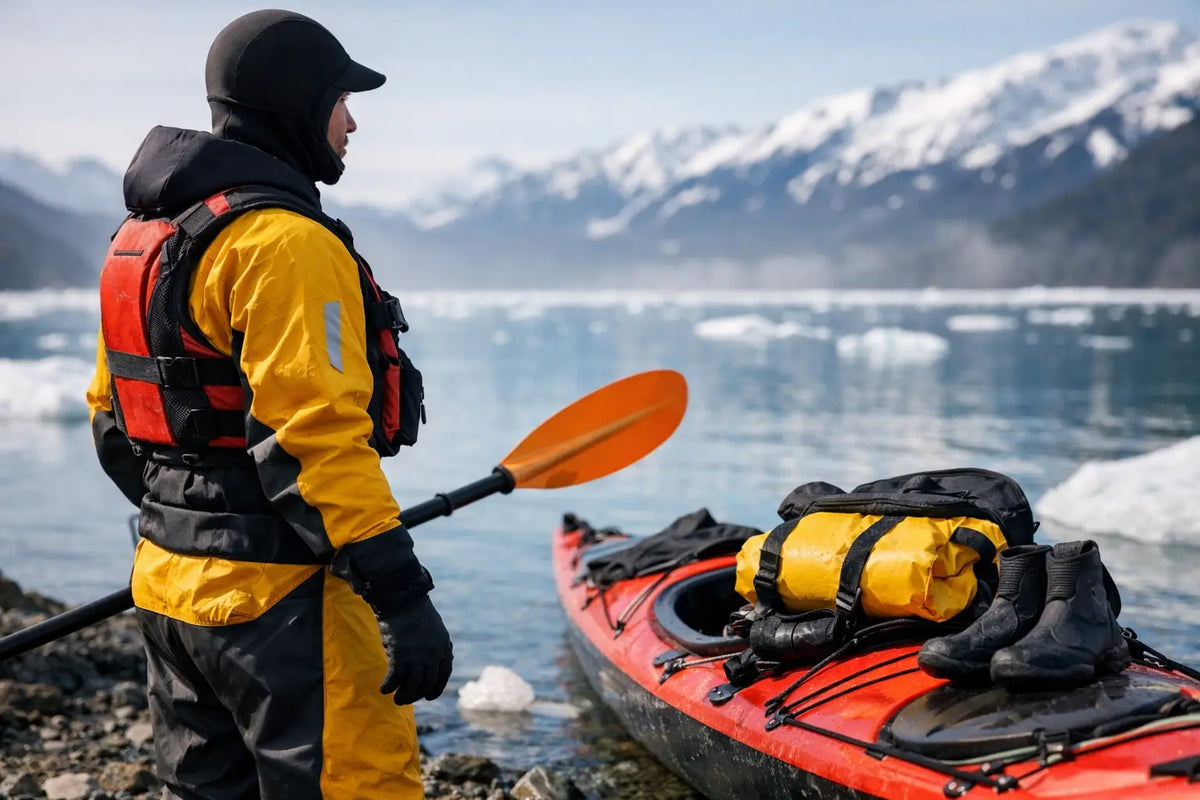
A sunny launch ramp can make cold water look harmless. It is not. If your kayak flips, water temperature takes over fast: cold shock can steal your breath, numb hands can make re-entry difficult, and wet clothing can drain body heat long after you get back aboard. Knowing what to wear kayaking cold water starts with one rule: dress for the water you may end up in, not just the air you feel at the shoreline.
For many paddlers, that means choosing a dry suit or wetsuit, then building a clothing system that stays useful when wet. The right setup depends on water temperature, wind, trip length, your route, and how likely a capsize may be. A calm, sheltered one-hour paddle calls for different gear than a spring fishing trip on a large lake or a coastal tour with current and boat traffic.
Start With Water Temperature, Not the Forecast
Air temperature affects comfort, but water temperature drives the risk. Cold water can trigger an involuntary gasp and rapid breathing within seconds. That is dangerous even for strong swimmers, especially when you are surprised, tangled in gear, or separated from your paddle.
A practical rule for recreational paddlers is to use more protection whenever water is below about 60°F. Below 50°F, immersion clothing should be treated as standard equipment rather than an optional upgrade. Wind, rain, and a long distance from shore can make conditions more serious at higher temperatures too.
Do not rely on the old “air temperature plus water temperature” rule alone. It can be a rough reminder that conditions are cold, but it does not account for wind, current, skill level, or rescue time. Ask a more useful question: if I am in this water for 10 to 20 minutes, can my clothing help me stay functional long enough to get back in the kayak or reach shore?
Dry Suit vs. Wetsuit for Cold-Water Kayaking
A dry suit is the strongest choice for consistently cold water, long crossings, open water, and trips where rescue could take time. It has waterproof fabric, sealed neck and wrist gaskets, and integrated socks or ankle seals that keep outside water out. A dry suit does not provide much insulation by itself, so warmth comes from the layers worn underneath.
Choose a dry suit when the water is very cold, the weather is variable, or you expect to paddle in conditions where a capsize is possible and shore is not close. It costs more than a wetsuit and can feel warm during hard paddling, but its flexibility is valuable. You can add or remove insulating layers as temperatures change.
A wetsuit works by trapping a thin layer of water next to the body, which warms from your body heat. It is often a practical option for cool water, active paddling, and budget-conscious setups. For kayaking, a farmer-john or farmer-jane wetsuit with a separate paddling jacket is common because it leaves the shoulders freer than a full suit. The trade-off is that a wetsuit is less comfortable for sitting and can be noticeably colder during long periods of immersion, particularly around the arms and upper body.
Avoid treating a splash jacket and rain pants as a dry suit. They block wind and spray, which is useful, but they are not sealed for swimming or a prolonged capsize. They belong over a wetsuit or dry-suit system, not in place of one.
Build Warm, Functional Layers Under Your Suit
For cold water kayaking, cotton is the layer to leave at home. Cotton holds moisture, dries slowly, and loses insulating value when wet. That includes cotton T-shirts, sweatpants, denim, and everyday socks.
Under a dry suit, start with a synthetic or merino wool base layer that moves perspiration away from your skin. Add fleece or synthetic insulation based on the temperature. Thin fleece may be enough for a cool, active day. For near-freezing water or slower activities such as fishing, heavier fleece pants and a fleece top can provide a safer margin.
Merino wool is comfortable and resists odor, while synthetic layers dry quickly and are usually more affordable. Either can work well. The key is fit: clothing should be warm without bunching at the knees, shoulders, neck, or dry-suit gaskets. Restrictive layers make paddling harder and can interfere with movement during a self-rescue.
Bring a fully dry change of clothes in a waterproof dry bag. This is not just a comfort item. After a capsize, changing out of damp layers can help stop heat loss once you are ashore or back at the vehicle.
Protect Your Head, Hands, and Feet
Cold hands are more than uncomfortable. When fingers lose dexterity, simple tasks such as fastening a PFD buckle, operating a phone, holding a paddle, or using a bilge pump become harder. Neoprene gloves offer a close fit and good paddle control. Neoprene mitts are warmer but less precise. Pogies, which attach around the paddle shaft, shelter bare hands from wind and spray while keeping direct grip on the paddle.
For your head, a warm beanie is useful on calm days, but it should not replace protective headwear where rocks, surf, or moving water are involved. A paddling helmet paired with a thin neoprene hood or skull cap is the better option for whitewater and rocky shorelines. A neoprene hood is especially helpful in very cold water because heat loss from the head and neck can be significant during immersion.
Footwear should protect your feet both in the kayak and during an unexpected walk through mud, rocks, or cold shallows. Neoprene booties are a reliable choice, ideally with a sturdy sole for launching and landing. Make sure they fit inside your kayak without pinching your feet or limiting pedal controls. Dry suits with integrated socks need water shoes or paddling boots over them to prevent wear and provide traction.
A PFD Is Part of What to Wear Kayaking Cold Water
Wear a properly fitted personal flotation device every time, not strapped to the deck or stored behind the seat. In cold water, a PFD keeps you afloat while you regain control of your breathing and begin your rescue plan. It also adds a little insulation around your core.
A kayaking-specific PFD is usually more comfortable than a general-purpose life jacket because it has a higher back panel that works with kayak seats and open shoulders for paddling. Fit it snugly. If you can pull the shoulders up toward your ears, tighten the straps. Test the fit over your actual cold-water layers, since a PFD that fits over a T-shirt may be too tight over a dry suit and fleece.
Carry a whistle on the PFD, and keep a communication device protected in a waterproof case or pocket. On remote water, a paddle float, bilge pump, tow line, and emergency insulation can be equally practical. Your clothing buys time; your safety gear helps you use that time well.
Adjust for Your Kayak and Your Plan
Sit-on-top kayaks expose you to more splash and drip, so lower-body insulation matters even on days when you do not expect to swim. Recreational sit-inside kayaks can feel warmer, but water can still enter the cockpit during a capsize or rough launch. Sea kayakers and whitewater paddlers often use spray skirts, which reduce water entering the cockpit but require practice to release quickly underwater.
Fishing from a kayak can be deceptively cold because long stretches of sitting reduce heat production. Add insulation before you feel chilled, particularly in the legs and feet. If you are paddling hard on a narrow river, you may need fewer layers than someone drifting and casting on an exposed reservoir. Sweat is a problem too. If you overdress and soak your base layers from exertion, you lose warmth when activity slows.
Before launching, practice getting in and out of your kayak while wearing your full system. Check that your dry-suit relief zipper, PFD, footwear, gloves, and any spray skirt work together. Practice self-rescue in controlled conditions with a skilled partner or instructor. Cold-water gear is far more useful when you know how it behaves in the water.
Common Cold-Water Clothing Mistakes
The most common mistake is dressing for a comfortable car ride and a sunny shoreline. A hoodie, jeans, and a light rain jacket may feel fine at launch, but they become heavy, cold, and ineffective after immersion. Another mistake is buying a quality dry suit and wearing only a thin cotton shirt beneath it. A dry suit keeps water out; it does not create warmth.
Paddlers also sometimes skip hand protection because gloves feel awkward. Test several options before a longer trip. The best gloves are the ones you can paddle, operate safety equipment, and wear consistently. Finally, do not wait for extreme winter conditions to use immersion clothing. Spring and fall water can be cold enough to create the same emergency.
A dependable cold-water setup lets you focus on the paddle, the cast, and the ride home rather than wondering whether you can handle an unexpected swim. Check the water temperature, choose protection for the consequences of a capsize, and keep dry layers ready for the end of the day.
Shop this guide


Free shipping on all orders within the United States.