
Inflatable vs Hard Paddleboard for Your Day
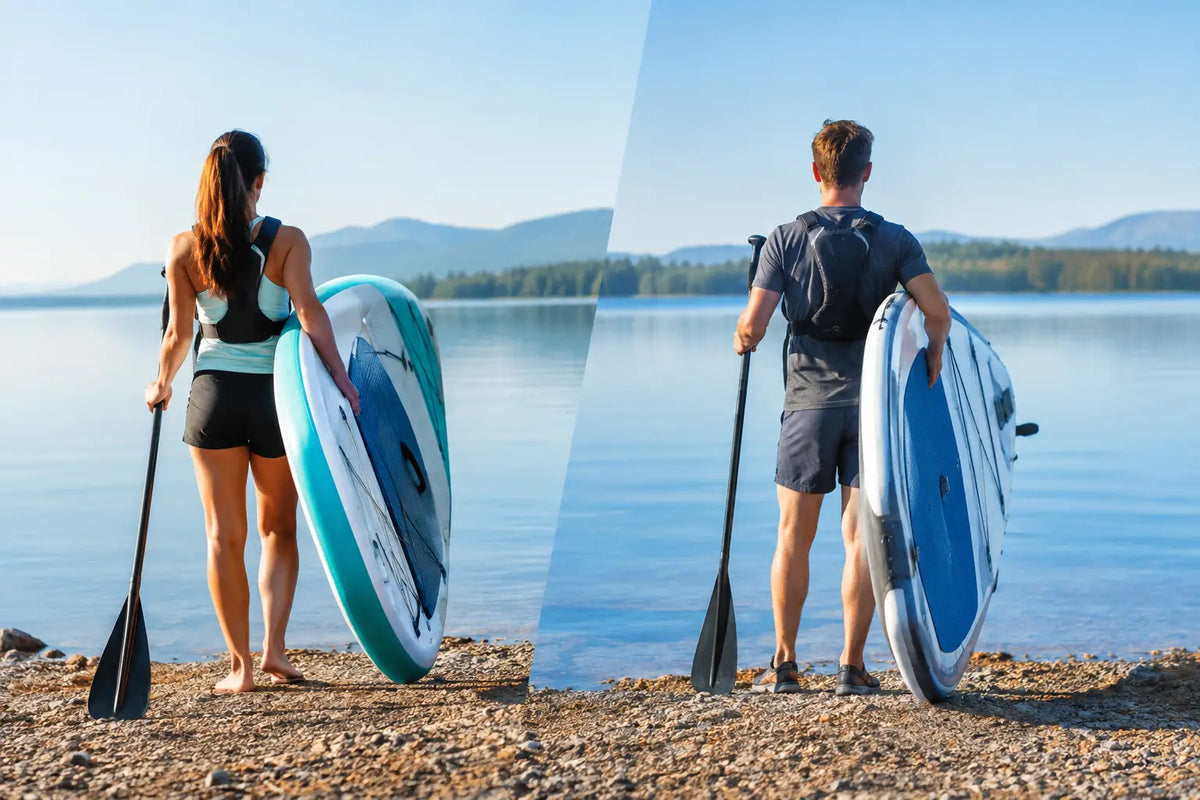
A paddleboard should make it easier to get on the water, not create a storage problem in the garage or a struggle at the launch. The inflatable vs hard paddleboard decision comes down to where you paddle, how you travel, how much performance you want, and whether your board needs to share space with camping gear, bikes, and everyday home essentials.
Both styles can deliver a dependable day on lakes, calm rivers, bays, and coastal water. The better choice is not automatically the most expensive board or the one used by advanced paddlers. It is the board that fits your routine well enough that you will actually take it out.
Inflatable vs Hard Paddleboard: The Core Difference
An inflatable stand-up paddleboard, often called an iSUP, uses a high-pressure drop-stitch construction. Thousands of internal threads connect the top and bottom layers, allowing the board to become firm when inflated to its recommended pressure. When the day is over, it deflates, rolls into a carry bag, and usually fits in a closet, vehicle trunk, or RV storage compartment.
A hard paddleboard has a rigid shell, commonly built from foam with fiberglass, epoxy, or durable plastic layers. It is ready to paddle as soon as it reaches the water, with no pump, inflation time, or pressure check required. Its fixed shape also gives designers more freedom to build boards that track faster and respond more precisely.
For most casual buyers, the real trade-off is simple: inflatable boards win on portability and convenience, while hard boards generally win on speed, responsiveness, and a more connected feel on the water.
Choose an Inflatable Paddleboard When Storage and Travel Matter
An inflatable paddleboard is often the practical answer for apartment dwellers, families with packed garages, RV travelers, and anyone without roof racks. Instead of carrying a 10- to 12-foot board on top of your vehicle, you can load the deflated board, pump, paddle, fin, leash, and repair kit into one bag.
That flexibility matters when your recreation plans change. An iSUP can travel to a campground, fit in a vacation rental, or stay in the car for an unplanned lake stop. It also removes some of the barriers for people who drive smaller SUVs, sedans, or trucks already loaded with fishing gear, coolers, and folding camp furniture.
Inflatables are also forgiving. Their softer rails and deck can be more comfortable for beginners who are still finding their balance. They are a popular option for family use, yoga, relaxed cruising, and paddling with a dog. If a board may bump into a dock, shoreline rocks, or another piece of gear during transport, an inflatable is less likely to show cosmetic damage than a fiberglass-style hard board.
What to expect from an iSUP
Inflatable boards do require setup. A manual pump can turn into a workout, particularly on hot days, so an electric pump is a useful upgrade for frequent paddlers. Follow the manufacturer’s recommended PSI range. Underinflating a board can make it feel soft, slow, and less stable, especially for larger riders or paddlers carrying a cooler.
Quality also matters more than the category label. Look for a board with appropriate weight capacity, a non-slip deck pad, a reliable valve, secure cargo bungees, and a removable or durable fixed-fin system. A wide all-around board, often around 32 to 34 inches wide, gives new paddlers a stable platform for calm-water use.
Do not assume every inflatable is a lightweight travel board. Larger fishing, touring, and multi-person models can be bulky once packed and heavy to carry. Check the packed weight and bag design if you will walk any distance from parking to the water.
Choose a Hard Paddleboard When Performance Is the Priority
Hard paddleboards feel more immediate underfoot. Their rigid construction does not flex in the same way as an inflatable, which can improve glide and efficiency over longer distances. That matters for paddlers who want to cover open-water miles, maintain a faster pace, or develop stronger technique.
A rigid board can also offer cleaner water entry and more specialized shapes. Long, narrow touring boards track efficiently on flat water. Surf-style hard boards respond more quickly when turning on waves. Advanced paddlers often prefer the predictable edge control and direct feedback of a hard board, particularly in wind, chop, or more technical conditions.
There is a convenience advantage, too. A hard board does not need to be inflated or dried inside a bag before storage. If you have a rack at home and a vehicle setup that can carry it safely, you can grab the board, secure it, and head out. For people who live near a launch point and paddle several times a week, that ready-to-go setup can outweigh the storage challenge.
The hard-board realities to plan for
A hard paddleboard needs a dedicated home. Wall racks, ceiling hoists, or a protected garage area help prevent dents and keep the board out of direct sun. You will also need a secure transport method, such as roof racks, cam straps, and bow and stern tie-downs when appropriate for the board length and vehicle.
Rigid boards are more vulnerable to chips, cracks, and pressure dents. They can last for years with sensible handling, but repairs may be needed after hard impacts. Carrying a long board through tight gates, around parked cars, or down rocky access paths takes more care than carrying a backpack-style iSUP bag.
Stability Depends on Shape, Not Just Construction
Many first-time paddlers assume an inflatable board is always less stable. That is not necessarily true. A properly inflated, wide all-around iSUP can feel very stable on calm water. A narrow hard touring board can feel tippy to a beginner, even though it is faster and more efficient.
For stability, compare width, volume, rider capacity, deck shape, and intended use. A larger paddler, a parent bringing a child, or an angler standing to cast will usually benefit from a wider board with a higher capacity. A lighter solo paddler who wants to cruise farther may prefer a narrower shape that glides with less effort.
Water conditions change the equation. In protected lakes and slow rivers, either board style can work well. In frequent wind, boat wake, coastal chop, or surf, a hard board may offer better performance for an experienced user. Beginners should still prioritize a shape they can stand on confidently over a board built purely for speed.
Durability, Maintenance, and Safety
Inflatable boards are tougher than many shoppers expect. Modern drop-stitch models are designed for outdoor use and can handle normal contact with docks, sand, and shallow shorelines. Still, they are not indestructible. Avoid dragging any board across rough pavement, inspect seams and valves regularly, and keep sharp hooks, knives, and tools away from the board surface.
Hard boards need protection from impact and long exposure to intense heat. Rinse either style after saltwater use, clean off mud and sand, and let the board dry before extended storage. For inflatables, do not pack the board away wet. Moisture trapped in a storage bag can create unpleasant odors and shorten the life of accessories.
A personal flotation device and leash are essential parts of the setup, not optional extras. Use the right leash for your environment. A coiled leash is common for flatwater paddling, while moving water and river conditions require added caution because a leash can become an entanglement hazard. Check local regulations, weather, water temperature, and launch conditions before heading out.
Cost and Value: Buy for the Way You Paddle
Entry-level inflatable packages often provide strong value because they may include a paddle, pump, fin, leash, bag, and repair kit. That gives a new paddler most of what they need in one purchase. Lower-cost packages can vary widely in construction and included accessory quality, so specifications deserve a close look.
Hard paddleboards range from durable recreational models to high-performance composite boards. A basic rigid board can be a good fit if you have storage and transport solved, while premium designs make more sense for people who paddle often enough to benefit from their specialized shape and lighter weight.
Consider the accessories you will need beyond the board. A paddle that fits your height, a properly sized PFD, dry storage, sun protection, roof transport equipment, or an electric pump can make a bigger difference in your experience than a small upgrade in board graphics or minor features.
A Practical Way to Make the Call
Choose an inflatable paddleboard if you need compact storage, travel with limited vehicle space, want a comfortable board for casual recreation, or plan to share it with family members. It is the flexible choice for mixed-use households where outdoor gear needs to pack away between weekends.
Choose a hard paddleboard if you have a safe place to store it, can transport it easily, paddle frequently, or want stronger glide and response for touring, fitness sessions, or surf-focused use. It is the performance-forward choice when the board can stay close to the water and ready for regular use.
Before you shop, picture your actual paddle day: where the board lives, how it gets to the launch, who rides it, and what the water usually looks like. The right paddleboard is the one that turns a free afternoon into time on the water instead of another piece of gear waiting for the perfect plan.