
Pedal Kayak Versus Paddle Kayak: Which Fits?
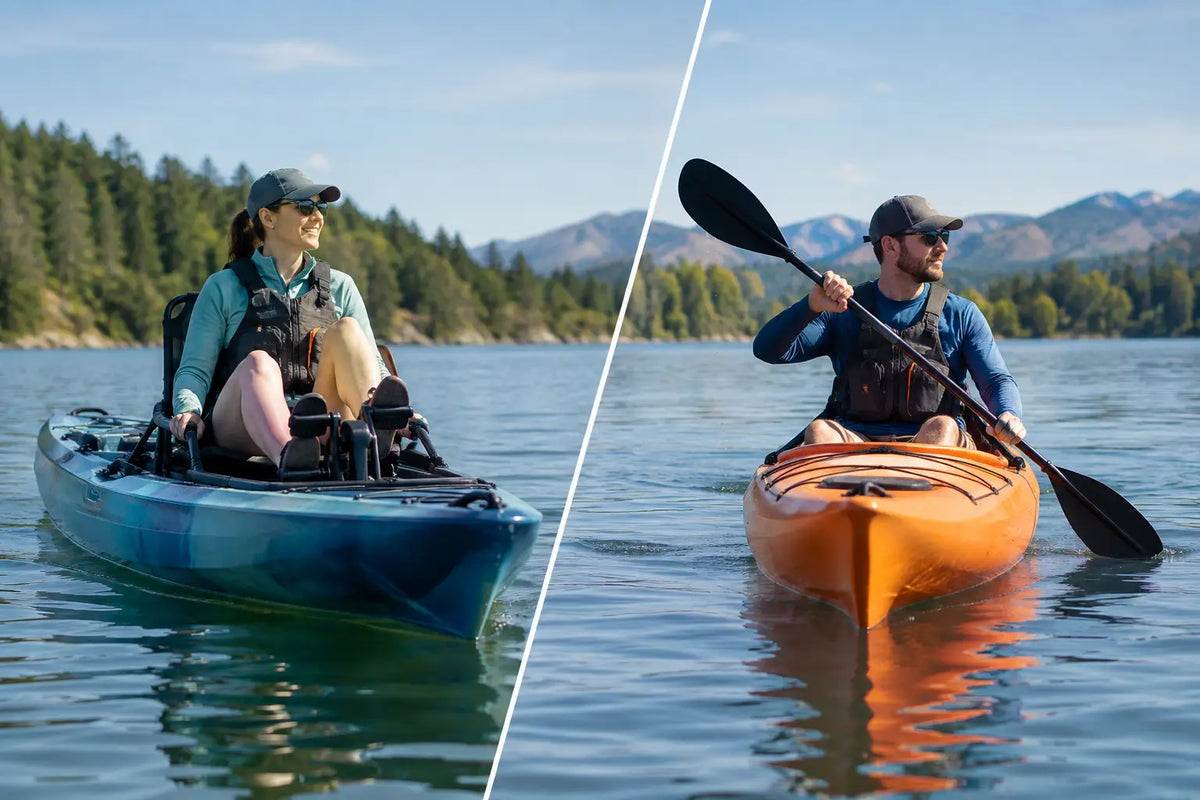
A calm cove can make any kayak seem like the right choice. The difference shows up when you are holding position over a fishing spot, covering a windy lake crossing, carrying gear from the parking lot, or trying to fit a boat into a crowded garage. In the pedal kayak versus paddle kayak decision, the best option is the one that matches how you actually spend time on the water.
Pedal models give many anglers and long-distance cruisers a major advantage: hands-free propulsion. Paddle kayaks stay lighter, simpler, and easier to launch in more places. Neither design wins every trip. Start with your water, your vehicle, your storage space, and the activities you want your kayak to support.
Pedal Kayak Versus Paddle Kayak at a Glance
| Feature | Pedal Kayak | Paddle Kayak |
|---|---|---|
| Propulsion | Foot-powered drive system | Double-bladed paddle |
| Hands-free use | Yes, while pedaling | No, except when drifting or anchored |
| Typical weight | Heavier | Lighter |
| Purchase cost | Usually higher | Usually lower |
| Shallow-water access | Limited by drive depth | Excellent with a paddle lifted clear |
| Best fit | Fishing, long open-water runs, photography | Recreation, travel, rivers, simple launches |
A pedal kayak uses a fin-style or propeller-style drive connected to pedals in the cockpit. Your legs supply the power, leaving your hands free for a rod, camera, phone, or other gear. Most pedal kayaks also include a paddle for launching, backup propulsion, and moving through very shallow water.
A paddle kayak moves with a traditional double-bladed paddle. It has fewer moving parts and typically weighs less than a comparable pedal model. Paddling also gives you direct control over quick turns, bracing, and maneuvering around rocks, docks, and narrow shorelines.
When a Pedal Kayak Makes Sense
A pedal kayak is built around efficiency and hands-free control. Strong leg muscles can maintain a steady cadence for a long time, which is useful when crossing a large reservoir, trolling a shoreline, or returning to the launch before weather changes. You can also keep moving while adjusting a lure, checking a fish finder, or taking a photo.
For fishing, that difference is practical rather than cosmetic. Pedaling allows you to approach cover with both hands available, maintain a controlled drift, and position the kayak without constantly setting down a rod. Many fishing-oriented pedal kayaks also have wide, stable hulls, elevated seats, gear tracks, rod holders, and room for tackle storage.
Pedal power can be especially helpful in mild wind. A paddler may need to stop fishing and make frequent corrective strokes to stay on course. A pedal user can apply steady pressure while keeping the bow pointed where it needs to go. Some premium drives offer reverse, which makes it easier to back away from docks, shorelines, and structure without turning the entire kayak.
That added capability comes with a cost. Pedal kayaks are commonly heavier, longer, and more expensive. A fully rigged fishing model may be difficult for one person to car-top or carry down a steep path. Before buying, check the total hull weight, drive weight, seat weight, and realistic loaded weight with a crate, battery, safety gear, and cooler onboard.
Consider the drive system and water depth
Fin drives generally move with an up-and-down motion and can often be partially tucked close to the hull for shallow areas. Propeller drives tend to provide a familiar cycling feel and can be highly efficient, but the propeller needs clearance below the kayak. Designs vary, so review the manufacturer’s shallow-water procedure rather than assuming every drive can handle the same conditions.
In stump fields, rocky creeks, oyster beds, and very shallow flats, you will often need to raise the drive and use your paddle. That is normal. A pedal kayak is not a replacement for basic paddle skills or sound water judgment.
When a Paddle Kayak Is the Better Buy
A paddle kayak is often the smarter choice for casual water days, small vehicles, frequent portages, and mixed-use recreation. It is simple: grab the kayak, a properly sized paddle, a personal flotation device, and the safety equipment required for your location. There is no drive unit to install, remove, rinse, or protect during transport.
Weight matters more than many first-time buyers expect. A lighter paddle kayak is easier to lift onto roof racks, slide into a truck bed, pull across a beach, and store vertically at home. If getting the kayak to the water feels like a two-person job every time, it may see less use than the lighter boat you can launch on your own.
Paddle kayaks also work well in tight or shallow water. You can make quick draw strokes around a dock, lift the paddle blade clear over submerged rocks, and maneuver through narrow channels without worrying about a pedal drive below the hull. Recreational and touring paddle kayaks can be excellent for lakes, slow rivers, coastal marshes, and campground trips.
There is a fitness benefit, too. Paddling uses your core, shoulders, back, and arms when done with good technique. It provides a full-body workout, but it can also tire your upper body faster than pedaling if you are new to the sport or using a poorly sized paddle. A quality paddle with the correct length and blade style makes a noticeable difference.
Cost, Transport, and Storage Can Decide It
The pedal kayak versus paddle kayak choice is not only about performance on the water. It is also about the routine before and after every trip.
Pedal kayaks usually carry a higher upfront price because the hull, seat, steering components, and drive system are more complex. They can be a worthwhile investment for dedicated anglers or frequent paddlers who will use the hands-free capability every week. But a basic paddle kayak leaves more room in the budget for a paddle, PFD, dry bags, roof-rack equipment, lighting, fishing tackle, and cold-weather layers.
Transport is another dividing line. If you own a trailer, pickup, kayak cart, or vehicle with a high-capacity roof rack, a heavier pedal kayak may be easy to manage. If you drive a compact car or must carry your boat through an apartment hallway, a lighter paddle kayak may be far more practical.
At home, protect either type of kayak from prolonged sun exposure and standing water. Store it supported according to the hull manufacturer’s guidance, not resting on a hard edge that can distort the shape over time. Pedal-drive components should be rinsed after saltwater use, dried as directed, and checked for fishing line, sand, or debris.
Match the Kayak to Your Main Activity
Anglers who regularly troll, cast around cover, or use electronics will usually get the most value from a pedal kayak. Its hands-free movement supports active fishing rather than simply getting from one spot to another. Add a stable hull, comfortable adjustable seat, gear tracks, a reliable cart, and a PFD designed for casting comfort.
For family outings, occasional lake use, campground travel, or relaxed exercise, a paddle kayak is often all you need. It is easier to share with friends, quicker to load, and less demanding to maintain. A stable sit-on-top design works well for warm-weather recreation, while a sit-inside kayak can provide more protection from splashes and cool air.
If your trips include both open lakes and skinny water, decide which condition is more common. Buying a pedal kayak for the occasional long crossing can be frustrating if most of your launches are shallow and rocky. Buying a paddle kayak for weekly fishing may feel limiting if you spend every outing wishing for a free hand.
Do not overlook fit and safety
A kayak should fit the paddler, not just the activity. Check seat comfort, legroom, foot adjustment range, cockpit access, capacity rating, and usable cargo space. The listed capacity must cover your body weight plus every item you bring, including a cooler, tackle, battery, anchor, and water.
Wear a properly fitted personal flotation device every time, and pack communication, hydration, sun protection, and weather-appropriate clothing. Pedal power or a high-end paddle will not replace a PFD, a float plan, or the decision to stay off the water when conditions exceed your ability.
Choose the kayak that makes it easier to go often and return safely. Whether that means a pedal-powered fishing platform or a lightweight paddle kayak ready by the door, the right setup turns a free afternoon into real time outside.