
Treadmill vs Rowing Machine for Home Fitness
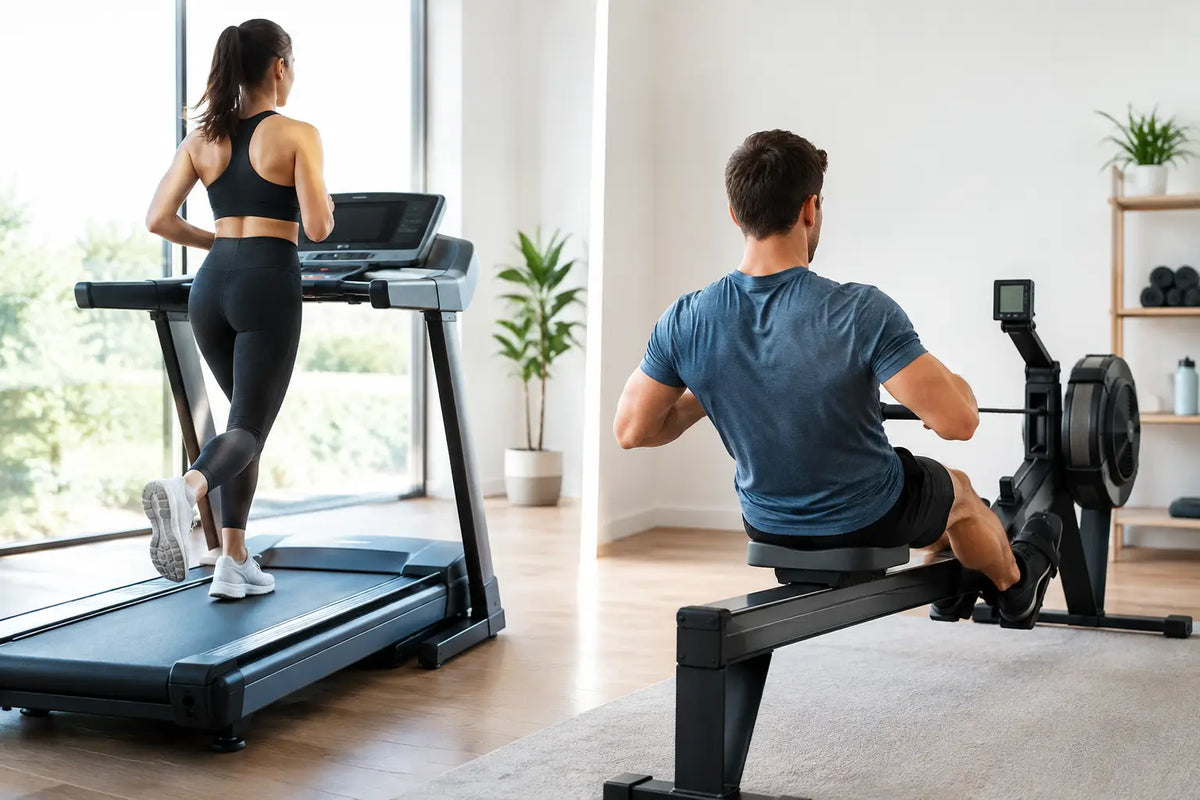
A home workout should fit the way you actually live. If you like a fast walk before work, training for a 5K, or watching a show while you move, a treadmill may earn its floor space. If you want a compact-feeling session that works your legs, back, arms, and core, a rower has a strong case. In the treadmill vs rowing machine decision, the better choice is less about which machine is harder and more about your goals, joints, available space, and willingness to learn good form.
Treadmill vs Rowing Machine: What Each Workout Feels Like
A treadmill delivers the movement most people already know: walking, jogging, or running. That familiarity matters. You can step on, select a speed, and begin. Walking at an incline can turn a straightforward routine into a demanding lower-body and cardio session without requiring you to run. For many home exercisers, that low learning curve is the treadmill's biggest advantage.
A rowing machine uses a repeated drive and recovery: push with the legs, lean back slightly, pull the handle toward the lower ribs, then return in control. Done well, it is rhythmic and powerful. The motion asks more from the body than a treadmill walk because the legs start the stroke while the back, arms, and core finish it.
That does not automatically make rowing better. A rower can feel awkward at first, and poor timing can reduce its benefits or make the lower back work harder than it should. A treadmill makes it easier to start moving immediately, but high-speed running can be demanding on the knees, ankles, and hips. Choose the motion you will use consistently, not the one that sounds most intense on paper.
Calories and Muscle Use Are Only Part of the Answer
Both machines can support calorie-burning workouts, heart health, endurance, and weight-management goals. The number on the display is only an estimate. Your body size, workout length, pace, resistance, incline, and effort level all affect how much energy you use.
Treadmill workouts can range from easy recovery walks to hard interval runs. Increasing incline is especially useful for building a challenging session while keeping speeds manageable. Your calves, glutes, quads, hamstrings, and cardiovascular system do most of the work. Your upper body contributes to balance and running rhythm, but it is not the focus.
Rowing engages more muscle groups during each stroke. Your legs produce the initial drive, then your glutes, hamstrings, upper back, lats, shoulders, arms, and core work together to complete the pull and keep your trunk stable. That broad involvement can make moderate rowing feel demanding quickly. It can also be a practical option for people who want cardio equipment that complements strength training without adding another separate machine.
Still, more muscles involved does not mean every rowing workout burns more calories than every treadmill workout. A hard hill walk or interval run can be extremely demanding. A gentle row with long rests may not be. The useful comparison is effort against effort: a focused session on either machine can move the needle.
For running goals, the treadmill wins
If you are preparing for a road race, rebuilding a walking habit, or simply enjoy the feel of putting one foot in front of the other, a treadmill is the more specific tool. It lets you control speed and incline precisely while practicing the movement you want to improve.
For full-body conditioning, rowing has the edge
A rowing machine is a strong fit when you want efficient, low-impact cardio with meaningful upper- and lower-body participation. It works well for interval sessions, steady endurance rows, and quick workouts when you want to feel like your whole body did something.
Joint Comfort and Injury Considerations
Walking is generally accessible, but running creates repeated impact with every step. A cushioned treadmill deck may feel more forgiving than pavement, yet it does not remove impact entirely. If your knees, hips, feet, or lower legs are sensitive, a brisk walk at a modest incline can be a smarter starting point than a fast run.
Rowing is usually considered low impact because your feet remain planted and the seat rolls instead of landing with each stride. That may make it appealing for people who want demanding cardio without the pounding of running. However, low impact is not the same as risk-free. Rounding the lower back, yanking the handle with the arms, or using excessive resistance can irritate the back, shoulders, or wrists.
For either choice, begin below your maximum effort and increase gradually. If you have an injury, ongoing joint pain, balance concerns, or a medical condition that affects exercise, ask a qualified healthcare professional or physical therapist what movement and intensity make sense for you.
Measure Your Space Before You Buy
A treadmill is usually the larger commitment. Beyond the machine's footprint, you need room behind it for safe entry, exit, and movement. Check the product's assembled length, width, deck height, user weight capacity, motor rating, speed range, and incline options. Folding designs can reduce stored length, but a folded treadmill still has weight and height to account for.
Rowing machines are long when in use, even though many can be stored upright or separated for storage. Measure your available floor length and ceiling height, particularly if the rower stores vertically. Also look at the rail length, seat comfort, resistance style, display functions, handle design, and stated user capacity.
Noise deserves a realistic look too. Treadmills produce footfall and motor noise, which may matter in an upstairs room or apartment. Rowers vary by resistance system. Some create a smooth, quiet feel, while others provide a louder, more mechanical workout sound. A protective equipment mat can help reduce vibration, protect flooring, and keep either machine from shifting during use.
How to Choose the Right Machine for Your Routine
Start with the routine you can picture doing three or four times a week. The person who enjoys morning walks and wants to build toward jogging should not buy a rower solely because it works more muscle groups. The person who dislikes running should not force a treadmill habit when rowing feels more engaging.
A treadmill is likely the better fit if you want familiar movement, easy walk-and-go sessions, running-specific training, or adjustable hill workouts. It also works well in shared households because users of different fitness levels can usually choose a comfortable speed without much instruction.
A rowing machine makes sense if full-body conditioning, low-impact training, and interval workouts are priorities. It can be especially useful for someone balancing outdoor activities such as paddling, hiking, biking, or fishing with an indoor fitness routine. The pulling motion is not identical to kayaking or canoeing, but it can support the back, core, and leg endurance that active days often demand.
Budget can shift the decision. Lower-priced treadmills may have shorter decks, lower top speeds, fewer incline options, or lighter construction than models built for frequent running. Entry-level rowers may have simpler monitors, limited resistance adjustment, or less refined seat and rail systems. Read dimensions and capacity specifications rather than relying on photos alone. A machine that matches your intended use is a better value than an upgraded model with features you will not use.
At Adventure Cove Store, home fitness equipment belongs in the same practical plan as gear for trail days, water days, and recovery at home. The right machine should help you stay ready for the activities you enjoy, not become another item taking up unused space.
Get Better Results From Either Machine
Consistency beats occasional all-out workouts. On a treadmill, use a pace that lets you maintain good posture, avoid gripping the handrails, and gradually introduce incline or short speed intervals. If you are new to exercise, a 20-minute walk is a useful session, not a placeholder for something harder.
On a rower, prioritize stroke sequence before chasing high resistance or fast split times. Think legs first, then body, then arms on the drive. On the return, reverse the order: arms, body, then legs. Keep the handle traveling smoothly and avoid collapsing forward at the finish. A short technique-focused workout can be more productive than a longer session with rushed form.
Both machines benefit from a simple setup: stable flooring, clear space around the equipment, supportive shoes for treadmill workouts, water within reach, and a schedule you can repeat. Pair cardio with basic mobility and strength work when possible, especially exercises that support your hips, core, and upper back.
The best home fitness machine is the one that turns available time into real movement. Pick the treadmill if walking or running will get you moving more often; pick the rower if a full-body, low-impact challenge makes you want to come back tomorrow.