
Choosing a Tactical Flashlight for Emergencies
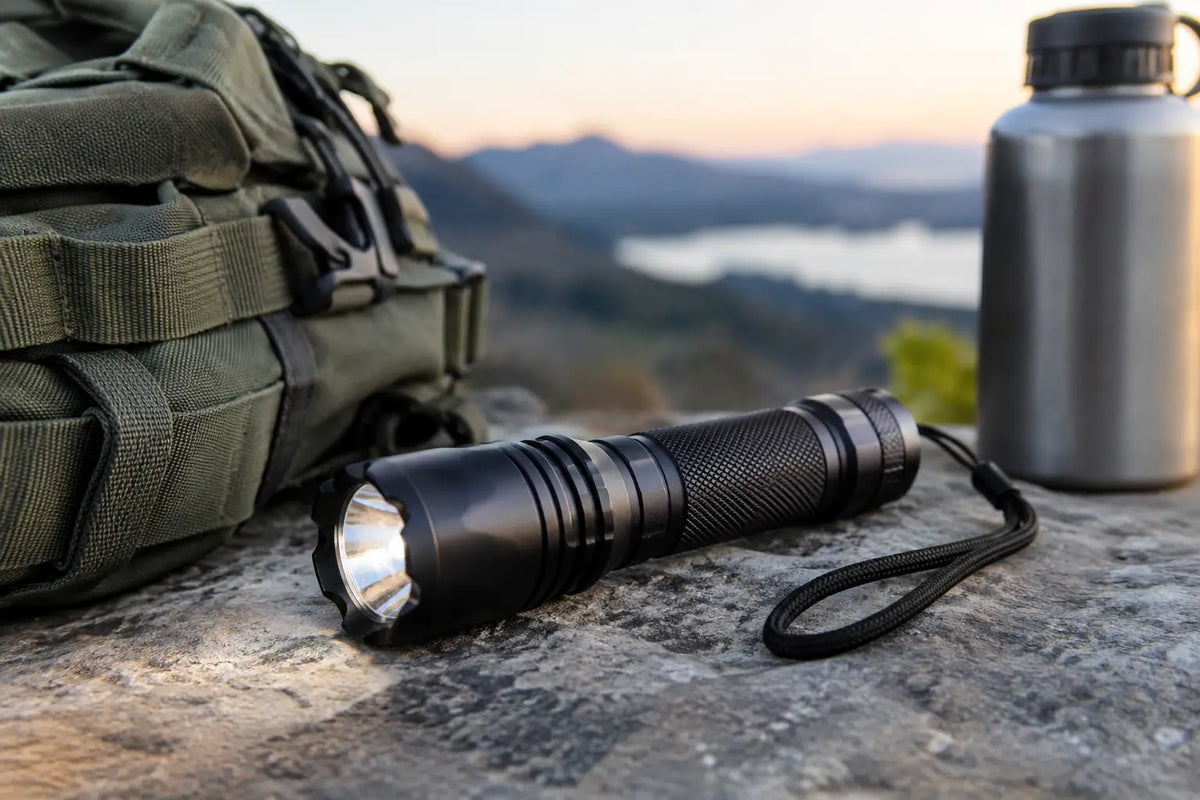
A power outage turns familiar rooms into obstacle courses fast. A roadside breakdown can leave you checking a tire shoulder-side after dark. At a campsite, a missing headlamp or a sudden storm makes a reliable handheld light more than a convenience. A tactical flashlight for emergencies gives you focused, portable light when your phone battery, porch light, or vehicle interior light is not enough.
The best choice is not always the flashlight with the biggest lumen number. For home, vehicle, camping, boating, and everyday carry, the useful light is the one you can find quickly, operate with cold or wet hands, and keep powered when you need it. Start with the job the light needs to do, then match the output, battery system, beam pattern, and weather protection to that use.
What a Tactical Flashlight for Emergencies Must Do
A tactical flashlight is generally built around quick operation, a durable body, a bright directional beam, and multiple output settings. Those traits work well for emergencies because they support both close tasks and longer-distance visibility. You might use low mode to locate a breaker panel, medium mode to walk a dark trail, and high mode to inspect a shed, scan a campsite perimeter, or signal from a disabled vehicle.
For most households, a flashlight should be easy enough for every adult to use without reading a manual. Look for a clearly located tail switch or side switch, a mode sequence that makes sense, and an instant-access high setting if rapid illumination matters. Complicated controls can be frustrating in normal use and worse when you are stressed.
Durability matters, but it should be relevant durability. An aluminum body, impact resistance, sealed charging port, and water resistance are useful for a glove box, garage, tackle box, or camp bin. If your light may go kayaking, boating, fishing, or through sustained rain, prioritize a stronger waterproof rating rather than assuming every metal flashlight can handle water exposure.
Choose Brightness for the Distance You Need
Lumens measure total light output, but they do not tell the whole story. Beam shape, reflector design, and light color affect what you can actually see. A broad beam illuminates nearby steps, rooms, and work areas. A tighter beam reaches farther and helps identify an object down a driveway, trail, dock, or roadside.
For routine preparedness, 300 to 800 lumens is a practical range. It provides meaningful light for household outages, vehicle checks, dog walks, and campsite tasks without making the flashlight unnecessarily large. A model rated around 1,000 lumens or more can be useful for open property, remote camping, boating, or security-focused use, especially when it has a lower setting for ordinary work.
Do not choose solely by maximum output. High mode often produces more heat and can drain a battery quickly. A flashlight that runs for several hours on a useful medium setting is often more valuable during a long outage than one that delivers an extreme burst of brightness for a few minutes. Check runtime at each mode, not just the largest lumen claim.
Beam Distance and Useful Coverage
Beam distance is especially relevant if you live on acreage, keep gear in an outbuilding, camp in dispersed sites, or travel rural roads. A focused beam helps you see farther, but a very narrow hotspot can leave the ground around your feet in shadow. For general emergency readiness, a balanced beam with both a bright center and usable spill light is easier to live with.
If the flashlight will primarily stay indoors, prioritize a wide, even beam and accessible low mode. For a truck, boat, or outdoor pack, a combination of flood coverage and longer reach is more versatile. It depends on where your emergencies are most likely to happen.
Pick a Battery System You Can Support
Battery choice is a preparedness decision. Rechargeable lithium-ion flashlights offer strong output and lower long-term operating cost. Models using common rechargeable cells, such as 18650 or 21700 batteries, can provide long runtimes, but they require a charging plan. Keep the light topped up and consider storing a compatible spare battery in a protected case.
USB-C charging is convenient for home, travel, and vehicle use because one cable can serve multiple devices. A flashlight with an onboard battery indicator makes it easier to know when charging is needed. That convenience does not replace backup power, though. During a widespread outage, your wall outlet and USB charger may not be available.
AA or AAA battery models are less powerful in some cases, but their batteries are easy to replace and widely available. They make good choices for basic home kits, older family members, or locations where you want straightforward battery swaps. A light that accepts both rechargeable and standard batteries can be particularly flexible, provided you follow its battery compatibility instructions.
For longer disruptions, keep your light with fresh spare batteries, a charging cable if applicable, and a power bank or other backup charging source. Store loose batteries in a case, not rolling around with keys, coins, or metal tools. Replace disposable batteries before they leak, and check rechargeable cells every few months.
Features That Earn Their Place
A useful emergency flashlight does not need every extra feature. It needs features that solve real problems. Prioritize the following when comparing models:
- Low, medium, and high modes give you enough light for different tasks while protecting battery life.
- Strobe or SOS modes can help attract attention, though they should not make the regular modes hard to access.
- Water resistance protects the light during rain, wet campsites, boat use, and unexpected spills.
- A non-slip grip and lanyard point reduce drops when hands are wet, gloved, or occupied.
- A tail cap that allows stable standing can turn the flashlight into a temporary area light by bouncing illumination off a ceiling.
Place Lights Where Problems Start
One good flashlight in a drawer is better than none, but several purpose-placed lights provide better coverage. Keep a primary tactical flashlight near the main exit or bedroom, where it is easy to reach during a nighttime outage. A second light belongs in the vehicle with roadside supplies. Campers and boaters should keep a waterproof or water-resistant light in their essential gear, not buried at the bottom of a storage tote.
For home preparedness, think through the first five minutes after the lights go out. You may need to check on children, pets, or older relatives, find footwear, locate the electrical panel, and move safely through hallways. A flashlight stored consistently in a known place is more useful than a higher-output model left in a backpack across the garage.
For outdoor trips, pair a handheld tactical light with a headlamp. The handheld light gives you reach, signaling capability, and controlled direction. A headlamp leaves both hands free for cooking, setting up a tent, changing fishing tackle, or making a basic repair. They serve different jobs, and carrying both avoids forcing one tool to do everything.
Test It Before You Need It
A flashlight is simple gear, which makes it easy to neglect. Test each light at least twice a year. Run it on high and medium, inspect the lens and seals, confirm the charger works, and replace or recharge the batteries. If it lives in a vehicle, check it after seasons of heat or freezing temperatures, which can reduce battery performance.
Practice using the controls without looking directly at the lens. Learn how to reach the desired brightness, activate strobe if your model has it, and lock the light out if it could turn on in a bag. Avoid shining high-output light into another person's eyes, toward drivers, or at aircraft. Brightness is helpful only when it is directed safely.
A tactical flashlight earns its place by making the next practical step easier: seeing the path, checking the problem, signaling for help, or keeping your household moving until normal light returns. Choose one that fits your real routines, keep it charged and within reach, and it will be ready for the moments when preparation matters most.