
Smartwatch Features for Hiking & Trails: Essential Guide

When you're deep in the backcountry, your smartwatch needs to work as hard as you do. The best smartwatch features for hiking and trails go way beyond telling time—they keep you safe, on course, and informed about your environment. Let's break down what actually matters so you can pick a watch that handles real trail conditions, not just marketing hype.
In this article
- Battery Life: The Foundation of Trail-Ready Watches
- GPS Accuracy: Knowing Exactly Where You Are
- Offline Topographic Maps: Navigate Without Cell Service
- Barometric Altimeter: Understanding Elevation Changes
- Route Deviation Alerts: Stay on Track
- 3D Compass: Orientation in Backcountry
- Durable Construction: Built for Real Hiking
- Screen Readability in Bright Daylight
- Lightweight Design: Less Fatigue on Long Days
- Multi-Day GPS Tracking: Extended Adventure Capability
- Mountaineering-Specific Features: High-Altitude Prep
- Real-World Testing Over Lab Specs
- People Also Ask
Battery Life: The Foundation of Trail-Ready Watches
Nothing kills an adventure faster than a dead battery. Multi-day GPS tracking with 20+ hours of continuous runtime is non-negotiable if you're serious about backcountry hiking. You need a watch that won't quit halfway through a long day on the trail.
Standard smartwatches drain fast when GPS is running. Trail-specific models prioritize extended battery performance because they know you're not checking notifications every five minutes—you're focused on the hike. Look for watches that offer distinct battery modes or promise at least a full day of heavy GPS use without needing a charge.
This matters even more on multi-day treks. A watch with stellar battery efficiency means fewer worries and more freedom to explore. When you're shopping, prioritize this feature above almost everything else. Adventure Cove Store carries gear built for long adventures, and watches are no exception.
GPS Accuracy: Knowing Exactly Where You Are
A GPS that works sometimes is worse than no GPS at all. Multi-band GPS technology—which uses multiple satellite signals simultaneously—gives you reliable positioning even in challenging terrain like dense forests, steep canyons, or mountainous regions.
Standard GPS can drift, especially in tricky conditions. Multi-band systems are more precise because they cross-reference multiple signals and filter out interference. Real-world testing is key here. Don't just trust lab specs; look for watches that hikers have actually tested in the conditions you'll face.
Accuracy matters when you're navigating off-trail or trying to find water sources. A few meters of error can add up quickly, so accuracy is worth paying attention to when comparing models.
Offline Topographic Maps: Navigate Without Cell Service
Cellular coverage disappears the moment you need it most. Offline topographic maps downloaded directly to your watch let you navigate anywhere, anytime. This is essential for backcountry hiking where you can't rely on internet or cellular signals.
Related: Camping on Horseback: Complete Guide & Essential Gear
Related: Best Camping Gear for Beginners: Essential Kit Guide
Related: Camping and Hunting: Essential Gear Guide for 2026
Look for watches with touchscreen-enabled offline topo maps so you can zoom in, pan around, and read terrain details without draining battery searching for a signal. Full-color mapping is a bonus—it helps you understand terrain context way better than black-and-white displays.
The ability to load maps before you leave civilization means you're never stuck guessing your location. This feature turns your watch into a serious navigation tool, not just a fitness tracker.
Barometric Altimeter: Understanding Elevation Changes
Elevation is everything in hiking. A barometric altimeter tracks your altitude accurately by measuring air pressure, not just GPS position. This gives you real-time data about climbing, descending, and your current elevation.
Why does this matter? Accurate elevation helps you estimate how much climbing remains, plan pacing, and understand the terrain profile of your route. It's especially valuable in mountainous regions where elevation changes significantly affect difficulty.
Barometric altimeters work even when GPS is off, saving battery while still delivering altitude data. This redundancy is smart design for outdoor watches.
Route Deviation Alerts: Stay on Track

It's easy to miss a trail junction when you're focused on the scenery. Route deviation alerts automatically notify you when you stray from your planned route. This simple feature prevents a casual wrong turn from becoming a serious navigation problem.
You load your intended route before heading out, and the watch watches for you. If you wander off course, it alerts you so you can correct immediately. This is especially useful on faint trails, during low-visibility conditions, or when you're hiking alone.
It's like having a navigation partner who never gets tired of keeping you on track.
3D Compass: Orientation in Backcountry
A traditional compass requires you to hold it flat and orient yourself manually. A 3D compass on your watch gives you bearing information instantly from any position—even in your backpack or at your wrist.
This becomes invaluable when you're orienteering or trying to identify landmarks across valleys. Combined with your watch's other features, a 3D compass makes real navigation possible without pulling out separate gear.
Durable Construction: Built for Real Hiking
Your watch will get wet. It will get banged against rocks, dragged through brush, and exposed to temperature swings. Construction quality directly impacts whether your watch survives the experience or fails when you need it most.
Look for watches with reinforced bezels, scratch-resistant sapphire or hardened glass screens, and sealed ports. Water resistance is baseline—aim for at least 5 ATM (50 meters) so creek crossings and rain won't kill it.
Material matters too. Stainless steel, titanium, or carbon-fiber designs resist damage better than plastic-heavy alternatives. Weight under 60 grams keeps fatigue minimal over long hiking days.
Screen Readability in Bright Daylight
A beautiful AMOLED screen is useless if you can't read it in direct sunlight. High visibility is non-negotiable for trail navigation. You need to glance at your watch in bright conditions and instantly see what you need to know.
AMOLED displays handle bright sunlight better than many LCD options, but brightness settings, screen contrast, and font size all play a role. Test any watch you're considering in actual sunlight, not just indoor lighting.
A watch you can't read is just dead weight on your wrist.
Lightweight Design: Less Fatigue on Long Days
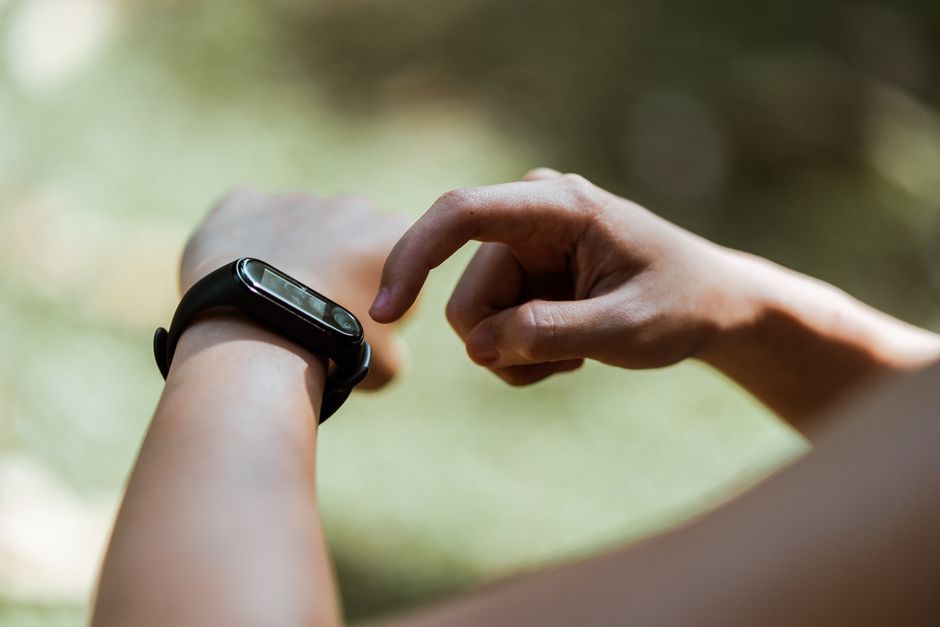
A heavy watch becomes more noticeable the longer you hike. Watches under 60 grams feel nearly invisible, while anything heavier creates noticeable wrist fatigue over eight, ten, or twelve-hour trail days.
This matters because you want your watch working for you, not against you. Lighter designs use advanced materials and efficient engineering. They're not just comfortable—they reflect smart design priorities.
Multi-Day GPS Tracking: Extended Adventure Capability
The ability to run GPS continuously for 20+ hours opens up real multi-day options. You can track your entire hiking day without toggling modes or swapping batteries.
This extended runtime means you can log ultra-distance days, summit attempts, or multi-day treks all on a single charge. It's the difference between a watch that works sometimes and one that actually supports serious hiking ambitions.
Mountaineering-Specific Features: High-Altitude Prep
If you're heading above tree line or into serious alpine terrain, look for mountaineering-specific functions. Specialized high-altitude features, extreme weather ratings, and additional climbing-focused data can make a real difference.
Some watches include storm alerts, barometric trend indicators, or specialized altimeter modes tuned for rapid elevation changes. These aren't necessary for casual trail hiking, but they're invaluable for serious mountaineers.
Real-World Testing Over Lab Specs
Specs look good on paper but real trails tell the truth. A watch might promise amazing battery life until you actually run it in the Sierra Nevada and discover it dies faster than advertised. Look for watches that have been tested by actual hikers in diverse conditions.
Read reviews from backcountry users, not just tech bloggers. Real-world feedback reveals whether GPS actually performs in dense forest, whether maps are intuitive to navigate, and whether the watch actually survives trail abuse.
If you're ready to invest in a quality watch for your adventures, Adventure Cove Store is your source for outdoor-focused gear built to handle the demands of serious hiking.
People Also Ask
Do I really need a smartwatch for hiking? A dedicated hiking watch with GPS and offline maps adds significant safety and navigation capability. For casual day hikes on well-marked trails, it's optional. For backcountry, multi-day, or off-trail hiking, a quality watch is essential.
What's the difference between GPS and multi-band GPS? Standard GPS uses one satellite signal source, which can be blocked or degraded by terrain and weather. Multi-band GPS uses multiple signal types simultaneously, providing more accurate positioning in challenging conditions like forests and canyons.
How long does a hiking smartwatch battery actually last? Real battery life depends on watch model, GPS mode, screen brightness, and temperature. Most modern hiking watches deliver 15-30 hours of continuous GPS tracking. Always verify with real-world reviews before buying.
Can I use a regular smartwatch for hiking? Regular fitness smartwatches prioritize daily notifications and apps, which drains battery quickly when GPS is active. Hiking-specific watches optimize for extended GPS runtime, offline maps, and durability. They're designed differently for a reason.
What should I look for in a smartwatch designed for hiking?
Priority one is battery life—aim for 20+ hours of GPS tracking. Multi-band GPS accuracy matters in challenging terrain. Offline topographic maps let you navigate without cell service. Barometric altimeter gives real elevation data. Durable construction under 60 grams keeps you comfortable. Bright, readable screen ensures usability in sunlight. Route deviation alerts and 3D compass support navigation. Real-world testing by actual backcountry users matters more than lab specs.
Is a barometric altimeter worth the extra cost?
Yes, if you hike in mountainous terrain or care about accurate elevation data. It works independently of GPS, saving battery while providing real-time altitude information. It helps you pace yourself, understand remaining climbing, and navigate complex terrain. For serious alpine hiking, it's essential.
Can smartwatch GPS work in thick forest?
Standard GPS struggles under dense canopy. Multi-band GPS performs much better because it uses multiple signals and cross-references them, filtering out interference. Even so, accuracy degrades somewhat in very dense forest. Test any watch in your local conditions before a big trip.
Do I need both offline maps and GPS on my watch?
Yes. Offline maps let you navigate and understand terrain. GPS tells you exactly where you are on that map. Together they make a complete navigation system. GPS alone without map context is just a dot floating in space. Maps without GPS is navigation guesswork.